
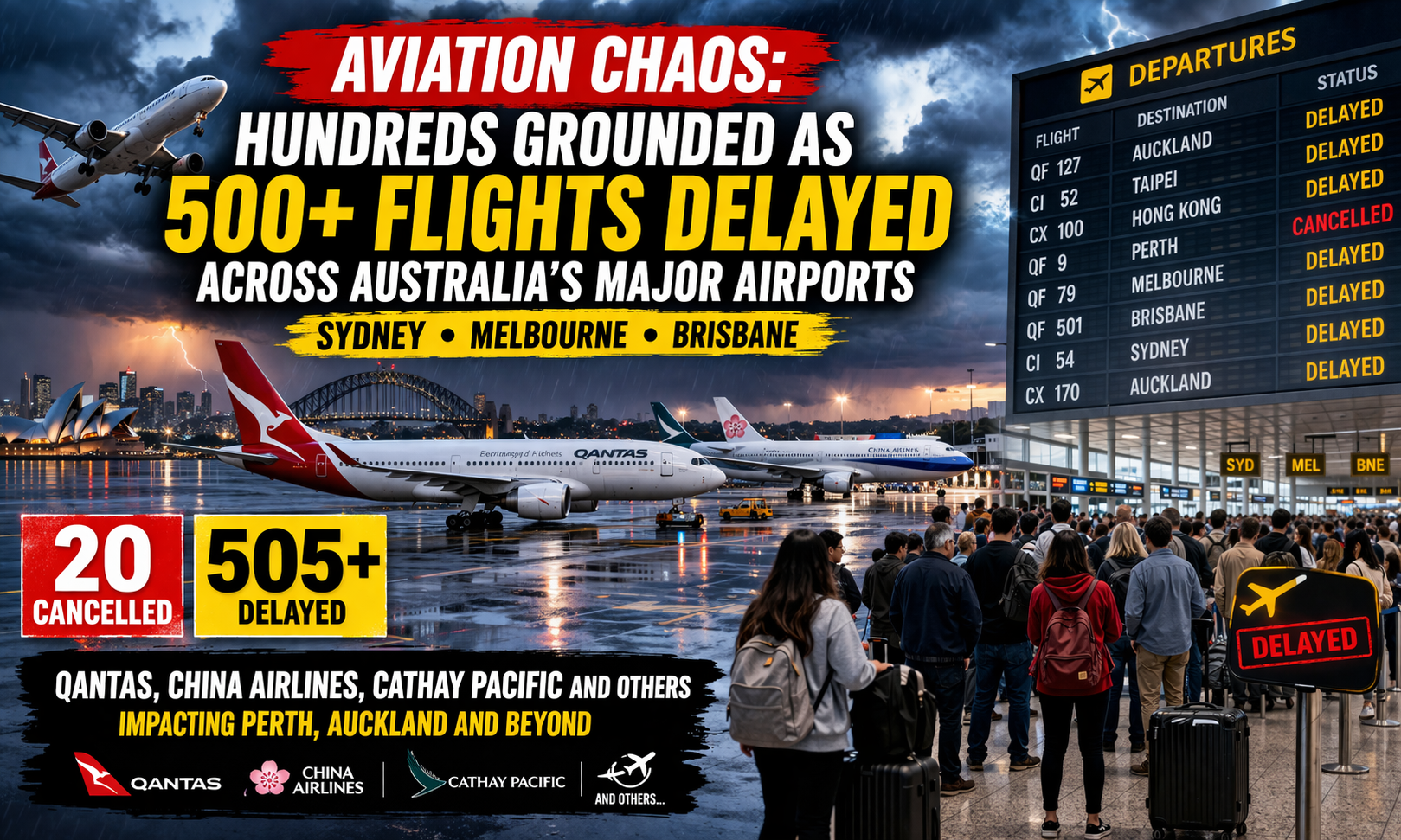
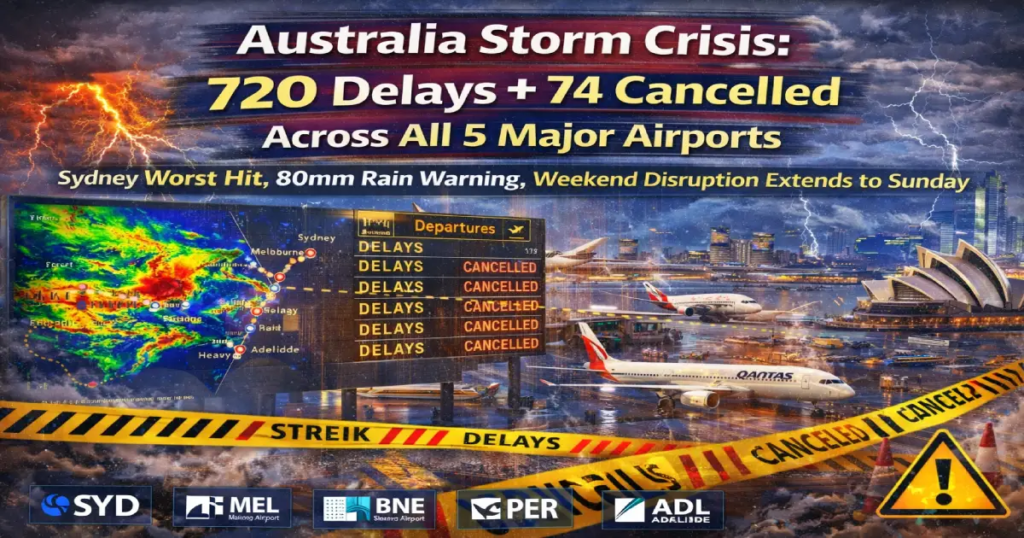
National Air Travel Crisis: Air travel across Australia experienced major disruptions today as hundreds of passengers were left stranded after widespread flight cancellations and delays across the country’s busiest airports. Airports in Sydney, Melbourne, and Brisbane reported significant delays, leaving travelers scrambling to rearrange their schedules and airlines working to manage the chaos.
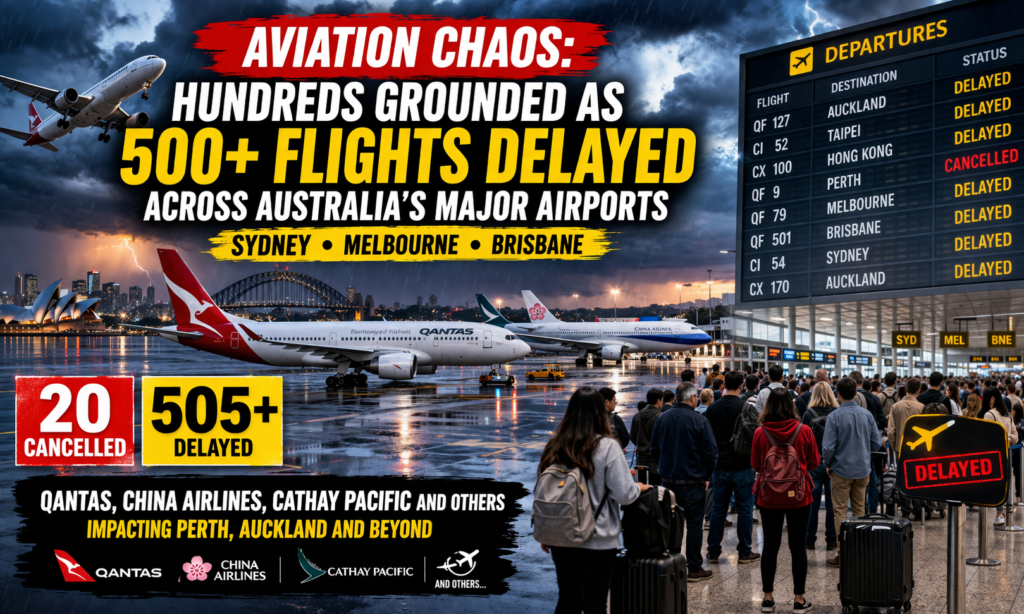
According to aviation reports, at least 20 flights were cancelled and more than 500 were delayed, affecting thousands of travelers across domestic and international routes. Major airlines including Qantas, China Airlines, and Cathay Pacific were among those impacted.
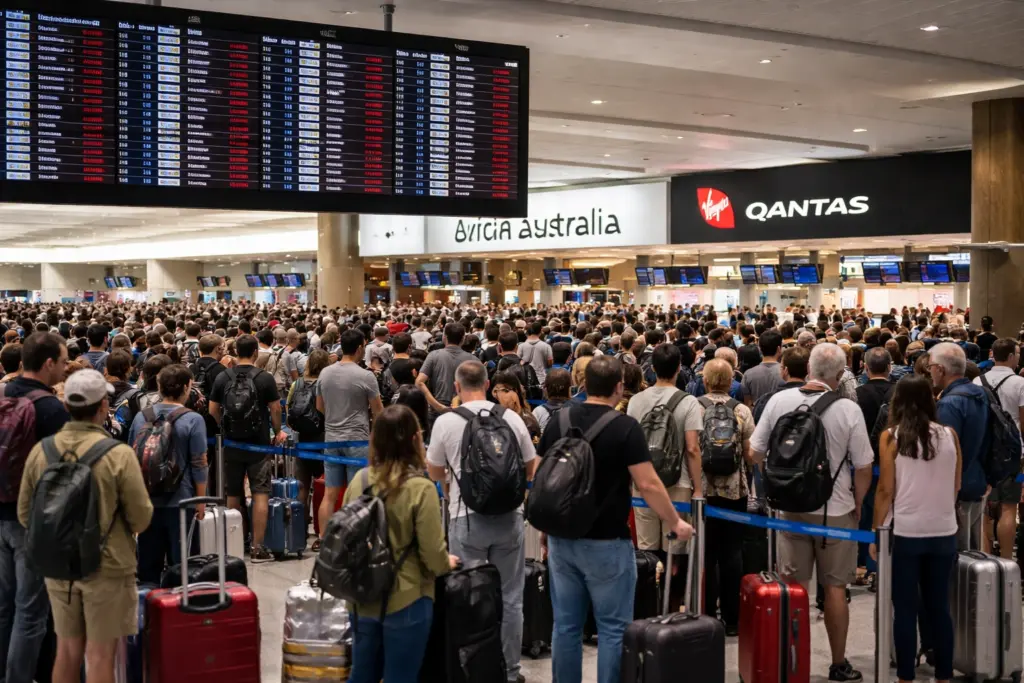
The disruption spread across multiple regions, affecting flights connecting cities such as Perth and Auckland and creating ripple effects throughout the aviation network.
This article explains what caused the disruptions, which airlines and airports were affected, what passengers should do if their flights were delayed, and how the aviation industry is responding.
Major Flight Disruptions Across Australia
Travelers across Australia woke up to a challenging day as flight boards filled with delays and cancellations. Airports in Sydney, Melbourne, and Brisbane were particularly affected.
These three airports serve as major hubs for both domestic and international travel. When disruptions occur at these locations, the impact can spread quickly throughout the aviation network.
Reports indicated that:
- Over 505 flights experienced delays
- 20 flights were cancelled
- Thousands of passengers were affected
- Domestic and international travel routes were disrupted
Airline staff worked throughout the day to assist stranded travelers and rebook affected passengers.
Airlines Affected by the Disruptions
Several international and domestic airlines were caught in the disruption wave. Among the most affected were:
- Qantas
- China Airlines
- Cathay Pacific
These airlines operate numerous routes through Australia’s busiest airports, making them especially vulnerable to scheduling disruptions.
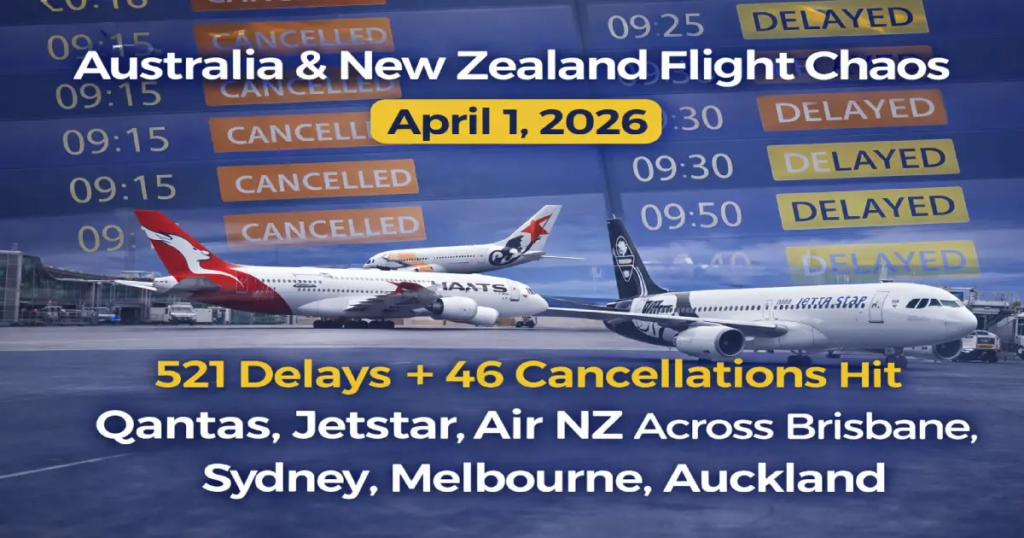
Flights traveling to and from key international destinations were impacted, including routes linking Australia with Asia and New Zealand.
Passengers traveling to cities like Auckland and Perth experienced delays that stretched several hours in some cases.
What Caused the Flight Delays and Cancellations?
Several factors contributed to the widespread disruptions across Australian airports.
Severe Weather Conditions
Weather conditions often play a major role in flight disruptions. Storms, heavy rainfall, and strong winds can affect airport operations and reduce runway capacity.
Even minor weather disturbances can lead to cascading delays throughout the aviation network.
Air Traffic Congestion
Air traffic congestion is another major contributor. Airports such as Sydney and Melbourne handle hundreds of flights daily.
When one flight is delayed, it can create a domino effect, forcing other aircraft to wait for departure or arrival slots.
Operational Issues
Operational challenges such as aircraft availability, crew scheduling, and maintenance checks can also lead to flight disruptions.
Airlines often operate tight schedules, and any unexpected issue can quickly disrupt multiple flights.
Impact on Domestic Flights
Domestic flights within Australia were among the hardest hit by the disruptions.
Routes connecting major cities such as:
- Sydney
- Melbourne
- Brisbane
- Perth
experienced delays throughout the day.
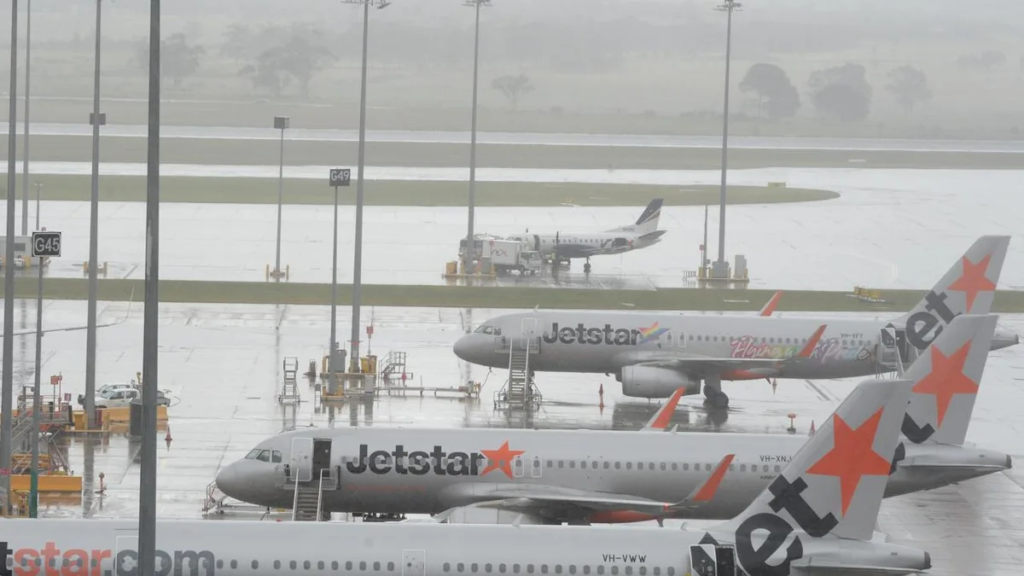
Business travelers, tourists, and families heading on holiday all faced uncertainty as departure boards displayed frequent updates and schedule changes.
International Travel Also Impacted
International passengers were not spared from the disruption.
Flights operated by airlines such as Cathay Pacific and China Airlines connecting Australia with Asia experienced delays that affected travelers across multiple continents.
Passengers traveling to destinations including:
- Hong Kong
- Taipei
- Auckland
reported extended waiting times and last-minute gate changes.
Passenger Frustration at Major Airports
Inside the terminals, scenes of long lines and frustrated travelers became common.
Passengers reported:
- Hours-long waits for customer service assistance
- Difficulty rebooking flights
- Uncertainty about connecting flights
- Limited accommodation options for overnight delays
Many travelers took to social media to share their experiences and express frustration with the disruption.
Airline Response to the Crisis
Airlines quickly mobilized staff to manage the disruption and assist affected passengers.
Companies such as Qantas issued statements advising travelers to check flight status updates before heading to the airport.
Airlines also worked to:
- Rebook passengers on alternative flights
- Provide meal vouchers
- Arrange accommodation for overnight delays
- Offer refunds or travel credits when necessary
Despite these efforts, the scale of the disruption made it difficult to resolve every issue quickly.
Economic Impact of Flight Disruptions
Large-scale flight delays and cancellations can have significant economic consequences.
Businesses relying on air travel may experience disruptions to meetings, events, and supply chains.
Tourism is also affected when travelers face delays or are forced to cancel trips.
Cities like Sydney and Melbourne rely heavily on tourism and business travel, making efficient airport operations essential to the local economy.
The Ripple Effect Across the Aviation Network
One of the most challenging aspects of aviation disruptions is the ripple effect they create.
A delayed flight departing from Brisbane can cause problems for connecting flights arriving in Perth or departing for Auckland.
Aircraft and crew schedules are tightly coordinated, so delays in one location can quickly affect flights across multiple countries.
Passenger Rights and Compensation
Passengers affected by delays or cancellations may be entitled to compensation depending on the airline’s policies.
Travelers should check their airline’s official website for information about:
- Refund eligibility
- Rebooking options
- Travel vouchers
- Accommodation assistance
Airlines like Qantas typically provide customer support for passengers whose flights are cancelled due to operational issues.
Tips for Travelers Facing Flight Delays
Travel experts recommend several strategies for passengers dealing with flight disruptions.
Check Flight Status Regularly
Before heading to the airport, passengers should verify their flight status online.
Arrive Early
Arriving early allows travelers to speak with airline staff if changes occur.
Stay Connected
Using airline apps and airport notifications can help travelers receive real-time updates.
Know Your Rights
Understanding airline policies can help passengers secure compensation or alternative travel arrangements.
The Future of Air Travel Reliability
As global air travel continues to recover and expand, airlines and airports face increasing pressure to improve reliability.
Technological improvements, better scheduling systems, and increased staffing could help reduce disruptions in the future.
Airlines such as Cathay Pacific and China Airlines are investing in operational upgrades designed to improve efficiency and minimize delays.
Final Thoughts
The widespread flight delays and cancellations across Australia today highlight the complexity of modern aviation networks.
With more than 500 delayed flights and dozens of cancellations, travelers across airports in Sydney, Melbourne, and Brisbane faced a challenging day.
Airlines including Qantas, China Airlines, and Cathay Pacific worked to manage the disruption and assist passengers.
While such events are often unavoidable due to weather and operational factors, they serve as a reminder of how interconnected the global aviation system has become.
For passengers, staying informed and prepared remains the best strategy when travel plans suddenly change.
FAQs
1. Why were flights delayed in Australia today?
Flights were delayed due to a combination of weather conditions, air traffic congestion, and operational issues affecting airports in Sydney, Melbourne, and Brisbane.
2. Which airlines were affected by the delays?
Major airlines impacted included Qantas, China Airlines, and Cathay Pacific.
3. How many flights were disrupted?
At least 20 flights were cancelled and more than 505 flights were delayed, affecting thousands of passengers.