
Introduction
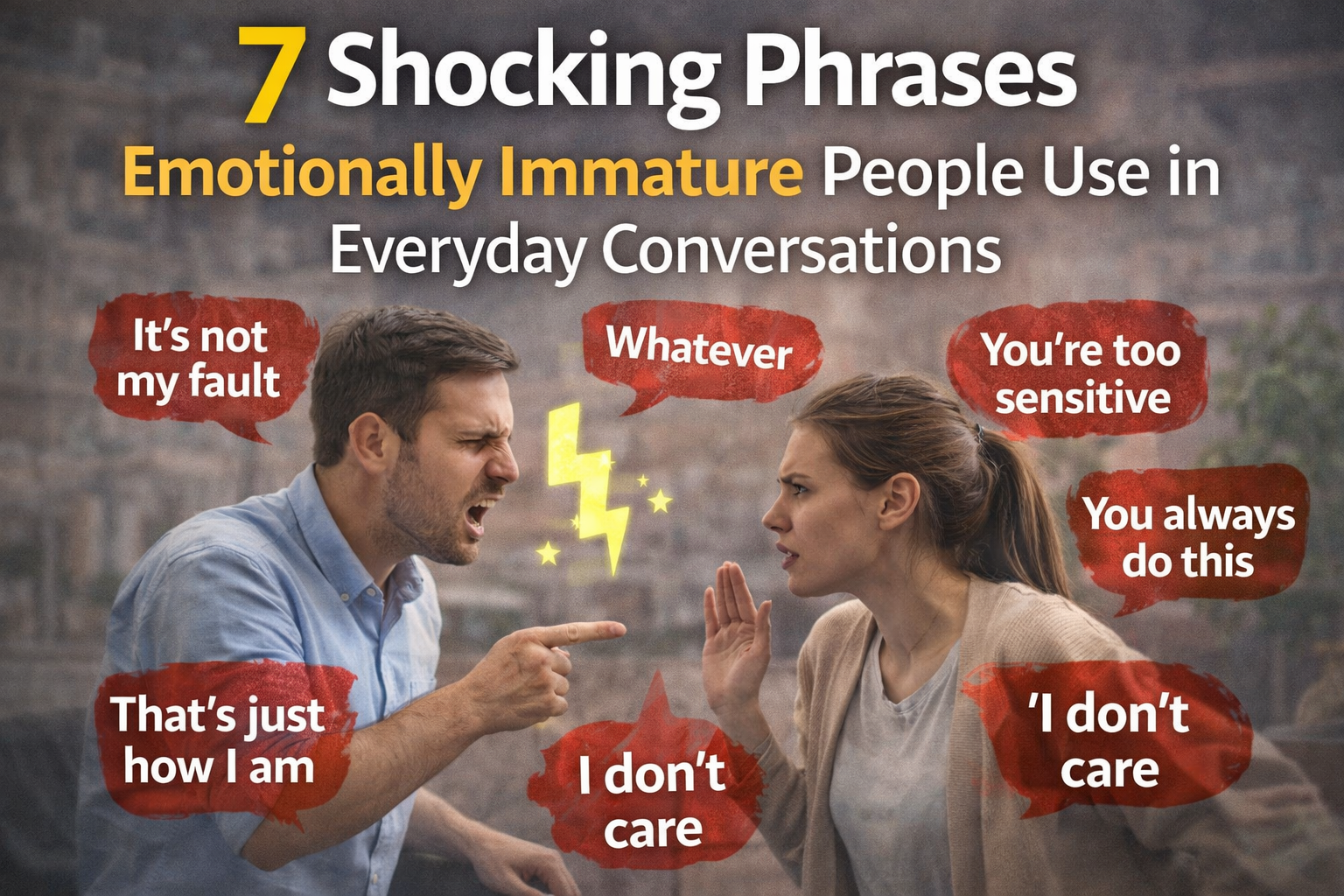
Communication plays a vital role in shaping our relationships and emotional well-being. The words we choose often reveal more about us than we realize. In fact, psychologists suggest that certain phrases can indicate a lack of emotional maturity.
Understanding emotionally immature people phrases can help you recognize unhealthy communication patterns and improve your interactions with others.
In this article, we will explore 7 common phrases emotionally immature people use in everyday conversations, what they mean, and how they affect relationships.
What Is Emotional Immaturity
Emotional immaturity refers to the inability to manage emotions in a healthy and constructive way.
People who are emotionally immature may struggle with:
- Taking responsibility
- Handling criticism
- Expressing feelings clearly
- Managing conflicts
Instead of responding calmly, they often react impulsively or defensively.
Why Words Reveal Emotional Maturity
The way people communicate reflects their emotional intelligence.
Emotionally mature individuals tend to:
- Take accountability
- Show empathy
- Communicate clearly
- Resolve conflicts respectfully
On the other hand, emotionally immature individuals often use phrases that avoid responsibility or dismiss others’ feelings.
That’s why identifying emotionally immature people phrases is important.
Emotionally Immature People Phrases Explained
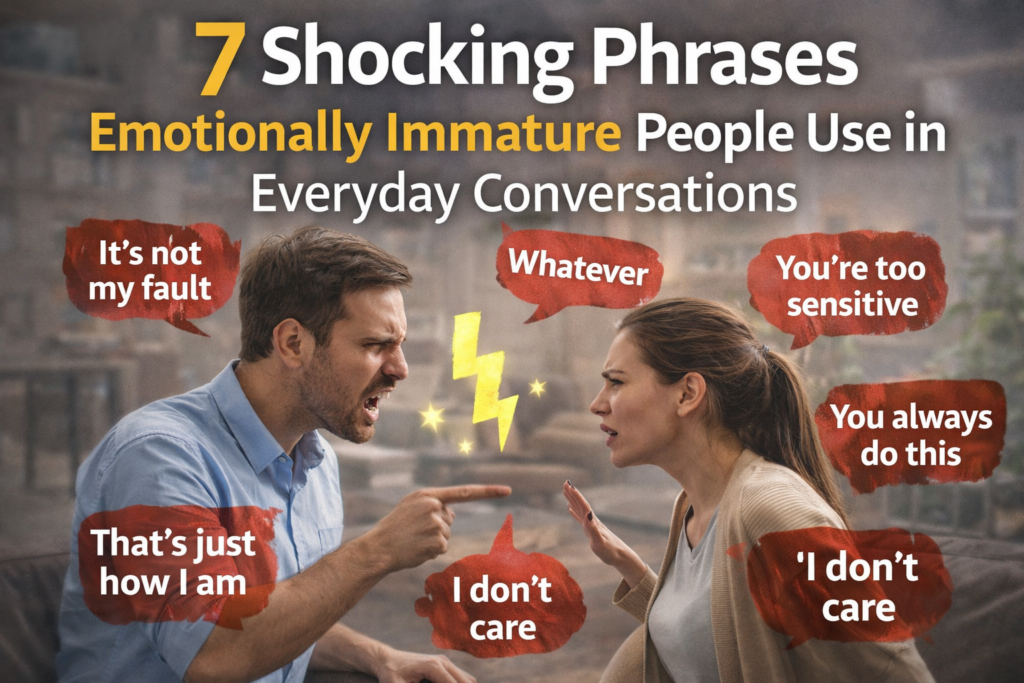
Certain phrases are commonly used by individuals who struggle with emotional regulation.
These phrases often:
- Shift blame
- Avoid accountability
- Dismiss emotions
- Create conflict
Let’s explore these phrases in detail.
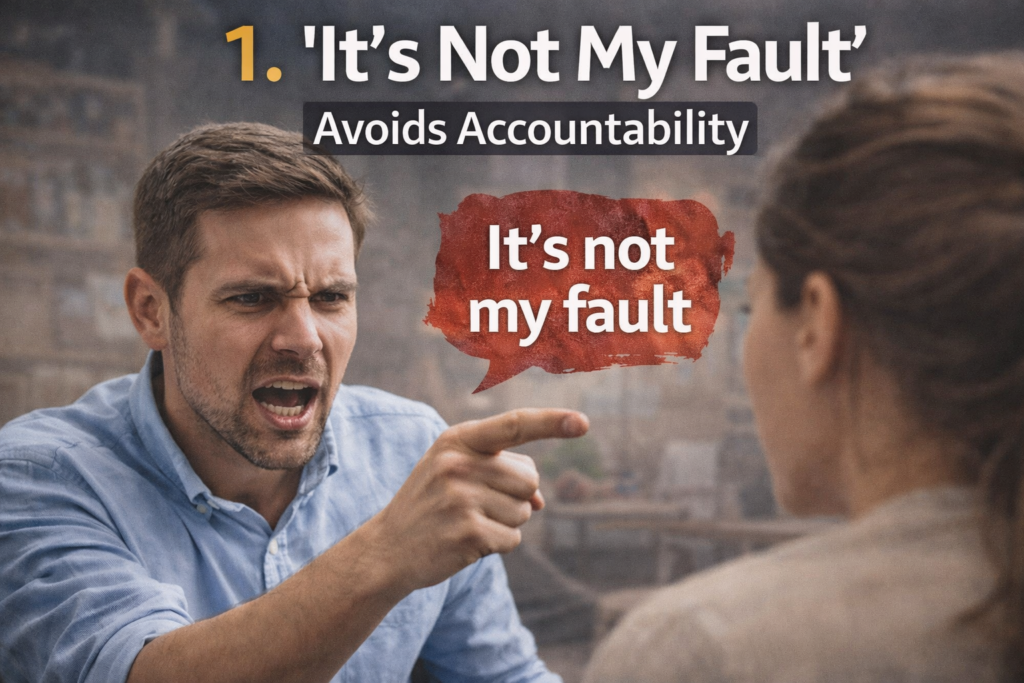
“It’s Not My Fault”
This is one of the most common phrases used by emotionally immature individuals.
Instead of taking responsibility, they immediately shift blame to others or external circumstances.
Why It’s a Problem
- Avoids accountability
- Prevents personal growth
- Creates frustration in relationships
A Healthier Alternative
“I may have contributed to this. Let’s figure it out.”
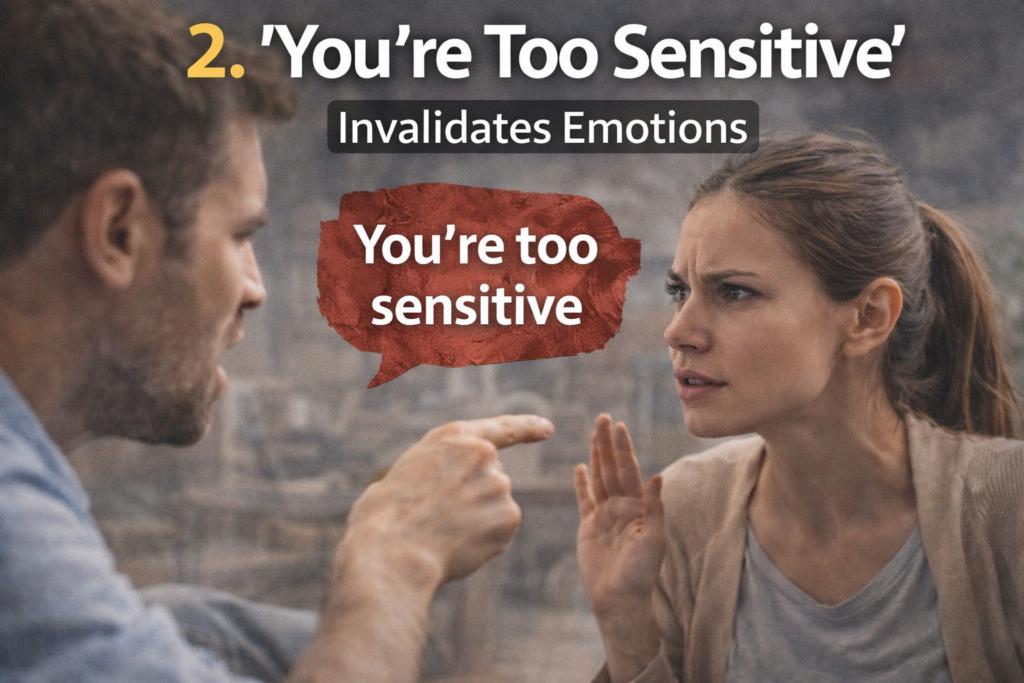
“You’re Too Sensitive”
This phrase dismisses another person’s feelings.
It is often used to avoid addressing the real issue.
Why It’s a Problem
- Invalidates emotions
- Damages trust
- Avoids meaningful discussion
A Healthier Alternative
“I didn’t mean to hurt you. Can we talk about it?”
“I Don’t Care”
While it may seem harmless, this phrase often reflects emotional avoidance.
It can signal disinterest or unwillingness to engage.
Why It’s a Problem
- Blocks communication
- Shows lack of empathy
- Creates emotional distance
A Healthier Alternative
“I need some time to think about this.”
“That’s Just How I Am”
This phrase is often used to justify negative behavior.
It suggests resistance to change or self-improvement.
Why It’s a Problem
- Avoids personal growth
- Excuses harmful behavior
- Prevents accountability
A Healthier Alternative
“I know I have areas to improve.”
“Whatever”
This one-word response may seem small, but it can be very dismissive.
It often signals frustration or unwillingness to continue the conversation.
Why It’s a Problem
- Ends communication abruptly
- Shows disrespect
- Escalates conflict
A Healthier Alternative
“I don’t agree, but I’m open to discussing it.”
“You Always Do This”
This phrase generalizes behavior and exaggerates situations.
It often leads to blame and defensiveness.
Why It’s a Problem
- Creates conflict
- Ignores specific issues
- Triggers arguments
A Healthier Alternative
“This situation is bothering me. Can we talk about it?”
“I’m Fine” (When Clearly Not)
This phrase is often used to hide emotions.
Instead of expressing feelings, emotionally immature individuals shut down.
Why It’s a Problem
- Prevents honest communication
- Builds emotional tension
- Leads to misunderstandings
A Healthier Alternative
“I’m upset, but I need some time to explain.”
How These Phrases Affect Relationships
Using emotionally immature people phrases can damage relationships over time.
They can lead to:
- Miscommunication
- Emotional distance
- Frequent conflicts
- Lack of trust
Healthy relationships require open and honest communication.
How to Respond to Emotionally Immature Language
Dealing with emotionally immature communication can be challenging.
Here are some strategies:
Stay Calm
Avoid reacting emotionally.
Set Boundaries
Clearly express what behavior is acceptable.
Encourage Open Dialogue
Invite constructive conversations.
Avoid Escalation
Do not engage in blame or criticism.
How to Develop Emotional Maturity
Emotional maturity is a skill that can be developed.
Practice Self-Awareness
Recognize your emotional triggers.
Take Responsibility
Own your actions and words.
Improve Communication
Express feelings clearly and respectfully.
Build Empathy
Understand others’ perspectives.
Developing these skills can improve both personal and professional relationships.
Conclusion
Understanding emotionally immature people phrases can help you identify unhealthy communication patterns and improve your interactions.
The phrases discussed in this article may seem common, but they can have a significant impact on relationships.
By recognizing these patterns and replacing them with healthier communication habits, individuals can build stronger, more meaningful connections.
Emotional maturity is not about being perfect—it’s about being aware, responsible, and willing to grow.
FAQs
Q1. What are emotionally immature phrases?
They are phrases that avoid responsibility, dismiss emotions, or create conflict in communication.
Q2. Why do people use these phrases?
Often due to lack of emotional awareness or difficulty handling emotions.
Q3. Are these phrases always harmful?
Not always, but repeated use can negatively affect relationships.