
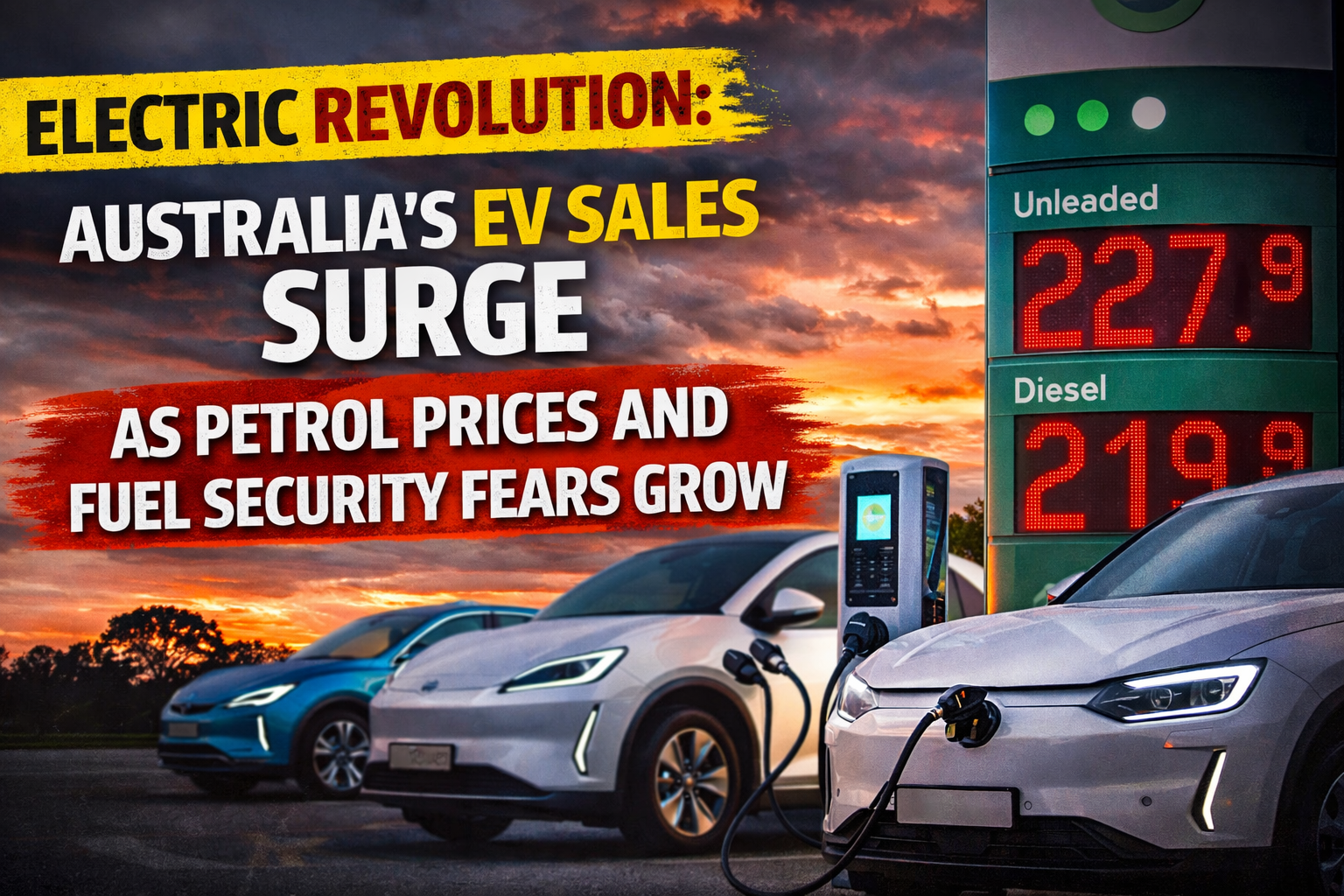
Driving the Future: Australia is witnessing a notable shift in its automotive market as electric vehicle (EV) sales surge dramatically. In March, the number of EV purchases climbed significantly, fueled by rising petrol prices and growing concerns about long-term fuel security. The trend reflects a broader transformation in consumer behavior as Australians increasingly look for cost-effective, environmentally friendly alternatives to traditional petrol and diesel vehicles.

With global energy markets remaining volatile and supply chain disruptions affecting fuel availability, many drivers across the country are reconsidering their reliance on internal combustion engine vehicles. The rising adoption of EVs signals that Australia may be entering a new era of sustainable transportation.
This surge in EV demand has been supported by government incentives, expanding charging infrastructure, and the growing availability of new electric vehicle models from major automakers. Industry experts say the March spike could mark a turning point for the Australian automotive sector.
Rising Petrol Prices Push Australians Toward Electric Vehicles
One of the most significant factors driving EV sales in Australia is the steady rise in petrol prices. Over the past year, fuel costs have fluctuated dramatically, placing increasing pressure on household budgets.
As petrol prices climb, many Australians are beginning to see electric vehicles as a practical long-term solution. EV owners typically benefit from lower operating costs because electricity is often cheaper than petrol, and electric cars require less maintenance due to fewer moving parts.
High fuel prices have historically influenced consumer decisions about vehicle purchases. However, the latest surge in EV sales indicates that Australians are now actively shifting toward alternatives that reduce dependence on fossil fuels.
Drivers who previously hesitated to purchase electric vehicles are now reevaluating their options. Many see EVs as a way to protect themselves from unpredictable fuel costs while also contributing to a cleaner environment.
Fuel Security Concerns Drive Interest in EVs
Another key reason behind the surge in EV sales is growing concern about Australia’s fuel security. The country imports a large portion of its refined fuel, leaving it vulnerable to international supply disruptions.
Geopolitical tensions, shipping delays, and global energy crises have highlighted the risks associated with relying heavily on imported petroleum products. As these concerns grow, many policymakers and consumers are exploring ways to strengthen national energy independence.
Electric vehicles offer one potential solution. By shifting transportation energy needs from imported fuels to domestically produced electricity, EV adoption could help improve Australia’s overall energy security.
Experts say that widespread EV adoption may reduce Australia’s exposure to international fuel price shocks. Additionally, the integration of renewable energy sources into the national grid could further strengthen the benefits of electrification.

Government Incentives Boost EV Adoption
Government policies have played a significant role in accelerating EV adoption across Australia. Several state and federal initiatives have been introduced to encourage drivers to transition away from petrol-powered vehicles.
These incentives include rebates, tax exemptions, and reduced registration costs for electric vehicles. Some states have also invested heavily in charging infrastructure to make EV ownership more convenient.
In addition to financial incentives, policymakers are implementing regulations aimed at reducing vehicle emissions. These policies are designed to align Australia with global climate goals and encourage the development of cleaner transportation technologies.
Industry experts believe that continued government support will be crucial for sustaining EV growth in the coming years.
Expanding Charging Infrastructure Supports Growth
One of the main barriers to EV adoption in the past was the limited availability of charging stations. However, Australia has made significant progress in expanding its charging infrastructure.
Public charging stations are now appearing in more cities, regional areas, and along major highways. This expansion is helping to reduce range anxiety — a common concern among potential EV buyers who worry about running out of battery power during long trips.
Fast-charging networks are also growing rapidly. These stations can recharge an electric vehicle battery to a significant level in less than an hour, making long-distance travel much more practical.
Private companies and energy providers are also investing in charging infrastructure, recognizing the growing demand for EV services.
Automakers Introduce New EV Models to the Australian Market
Another major driver behind the March EV sales surge is the increasing variety of electric vehicle models available to Australian consumers.
Automakers around the world are investing heavily in EV development as governments push for stricter emissions standards. As a result, more electric vehicles are entering the Australian market each year.
Consumers now have access to a wider range of options, including affordable compact cars, family SUVs, luxury electric vehicles, and even electric utes.
The availability of diverse models makes EVs appealing to a broader range of buyers, from urban commuters to families seeking practical transportation.
Consumer Attitudes Toward EVs Are Changing
Public perception of electric vehicles has evolved significantly in recent years. Many Australians who once viewed EVs as expensive or impractical are now recognizing their benefits.
Improved battery technology, longer driving ranges, and better charging infrastructure have made EVs more attractive than ever before.
Environmental awareness is also influencing purchasing decisions. Many consumers want to reduce their carbon footprint and support sustainable transportation solutions.
Social factors are playing a role as well. As more Australians adopt electric vehicles, the technology is becoming increasingly normalized.
Environmental Benefits of Electric Vehicles
Electric vehicles offer several environmental advantages compared to traditional petrol-powered cars. Because EVs produce no tailpipe emissions, they help reduce air pollution in urban areas.
Improved air quality can lead to significant health benefits, particularly in densely populated cities where vehicle emissions contribute to respiratory illnesses.
In addition, EVs can play an important role in reducing greenhouse gas emissions. When powered by renewable energy sources such as solar or wind, electric vehicles can significantly lower their overall carbon footprint.
Australia’s abundant renewable energy resources provide a unique opportunity to combine EV adoption with clean electricity generation.

Challenges Still Facing EV Adoption
Despite the recent surge in EV sales, several challenges remain.
One of the biggest obstacles is the relatively high upfront cost of electric vehicles compared to traditional cars. Although operating costs are lower, the initial purchase price can still be a barrier for some buyers.
Charging infrastructure is improving, but it still needs further expansion in rural and remote areas. Range limitations may remain a concern for drivers who frequently travel long distances.
Battery supply chains also pose potential challenges. Global demand for critical minerals such as lithium, cobalt, and nickel continues to grow rapidly.
Ensuring stable and sustainable supply chains will be essential for supporting future EV growth.
Australia’s Role in the Global EV Supply Chain
Australia is uniquely positioned to benefit from the global transition to electric vehicles. The country is one of the world’s largest producers of lithium, a key material used in EV batteries.
As demand for electric vehicles increases, Australia’s mining sector may experience significant growth. The country could also develop a stronger domestic battery manufacturing industry.
Investments in battery production, mineral processing, and clean energy technology could help Australia become a major player in the global EV ecosystem.
Industry Experts Predict Continued Growth
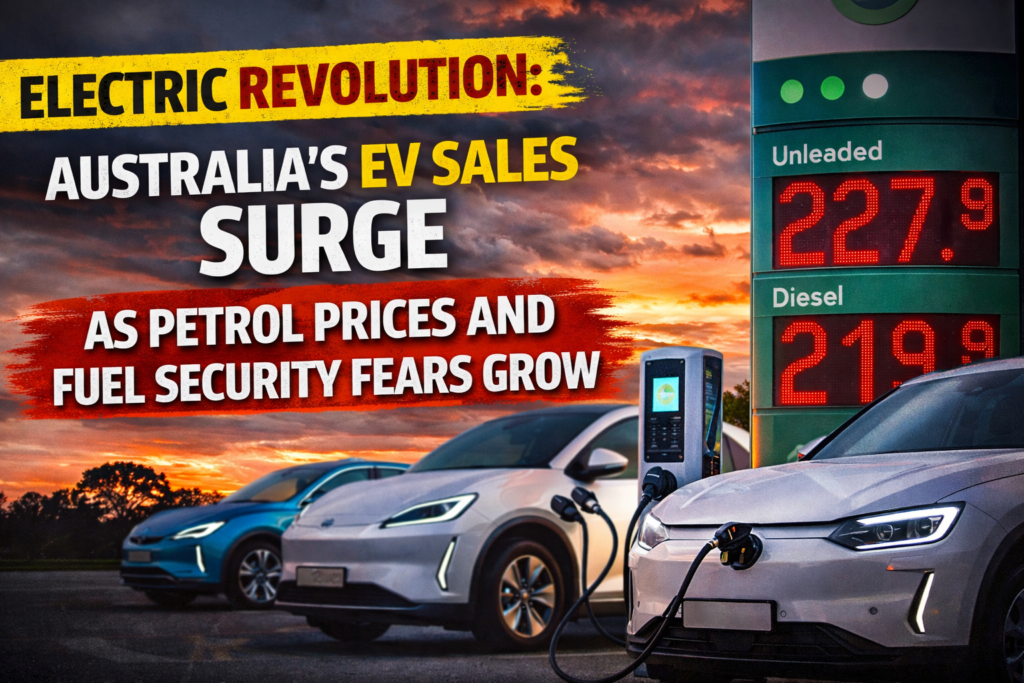
Many industry analysts believe that Australia’s EV market will continue expanding rapidly over the next decade.
Automakers are planning to release dozens of new electric models, while governments are introducing stricter emissions regulations that encourage cleaner vehicles.
Consumer demand is also expected to increase as EV prices gradually decline and charging infrastructure becomes more widespread.
Some forecasts suggest that electric vehicles could represent a significant share of new car sales in Australia within the next ten years.
What the March EV Sales Surge Means for Australia’s Future
The surge in EV sales during March may represent more than just a temporary spike. It could signal the beginning of a long-term transformation in Australia’s transportation sector.
Rising petrol prices, fuel security concerns, and environmental awareness are combining to reshape consumer behavior.
If current trends continue, electric vehicles could soon become a mainstream choice for Australian drivers.
This shift may also bring broader economic and environmental benefits, including reduced greenhouse gas emissions, improved energy independence, and new opportunities for technological innovation.
Conclusion
Australia’s surge in electric vehicle sales in March highlights a growing shift in consumer priorities. As fuel prices rise and concerns about energy security intensify, many Australians are turning to EVs as a practical and sustainable alternative to petrol-powered cars.
Government incentives, improved charging infrastructure, and expanding EV model options are helping accelerate this transition.
While challenges remain, the momentum behind electric vehicles appears stronger than ever. The March sales surge may be an early indication that Australia’s automotive future is increasingly electric.
As technology continues to advance and policies evolve, electric vehicles are likely to play an increasingly important role in shaping the country’s transportation landscape.
FAQs
1. Why did electric vehicle sales surge in Australia in March?
Electric vehicle sales increased in March mainly due to rising petrol prices and growing concerns about fuel security. Many Australians are switching to EVs to reduce fuel costs and avoid dependence on imported petrol.
2. What factors are driving EV adoption in Australia?
Several factors are encouraging Australians to buy electric vehicles, including government incentives, expanding charging infrastructure, rising fuel prices, and increased awareness of environmental sustainability.
3. Which electric vehicles are popular in Australia?
Some of the most popular EVs in Australia include models from companies such as Tesla, BYD Auto, Hyundai Motor Company, and Kia Corporation. These brands offer a variety of electric cars ranging from affordable compact vehicles to premium electric SUVs.