
Introduction
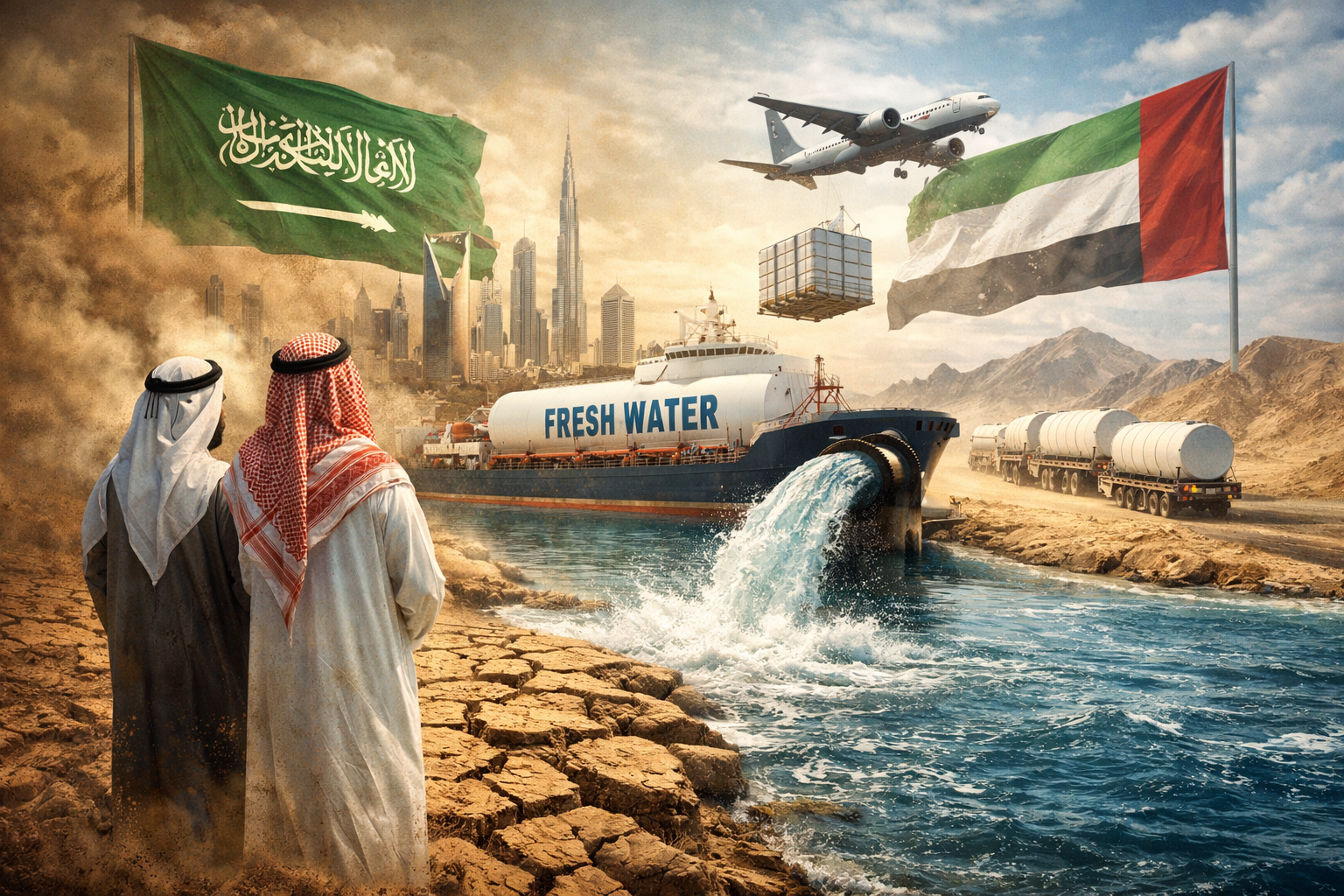
Water scarcity is one of the most pressing challenges facing many countries around the world. Among the most affected regions is the Arabian Peninsula, where natural freshwater sources are extremely limited.
Despite investing heavily in desalination technology, Saudi Arabia and the United Arab Emirates import billions in fresh water each year. This surprising reality highlights the complexity of water management in arid environments.
Both countries operate some of the largest desalination plants on Earth, producing millions of cubic meters of drinking water daily. However, growing demand, environmental challenges, and infrastructure limitations mean that desalination alone cannot meet all water needs.
Understanding why Saudi Arabia and the United Arab Emirates import billions in fresh water provides insight into the broader challenges of water security in desert regions.
Water Scarcity in the Arabian Peninsula
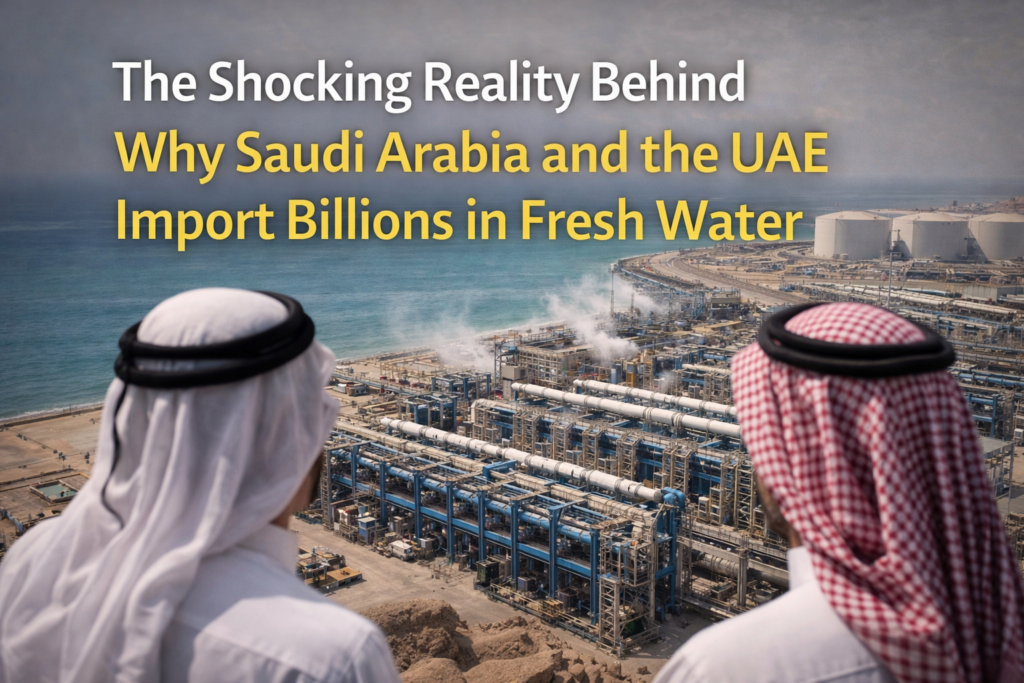
The Arabian Peninsula is one of the driest regions in the world. Natural freshwater resources are extremely limited due to the region’s climate and geography.
Annual rainfall is low and unpredictable, and most rivers or lakes are either seasonal or nonexistent.
Because of this, countries such as Saudi Arabia and the United Arab Emirates rely on alternative water sources including:
- Desalinated seawater
- Groundwater aquifers
- Imported freshwater
- Treated wastewater
However, groundwater reserves in the region are declining rapidly, making water management even more challenging.
Why Saudi Arabia and the United Arab Emirates Import Billions in Fresh Water
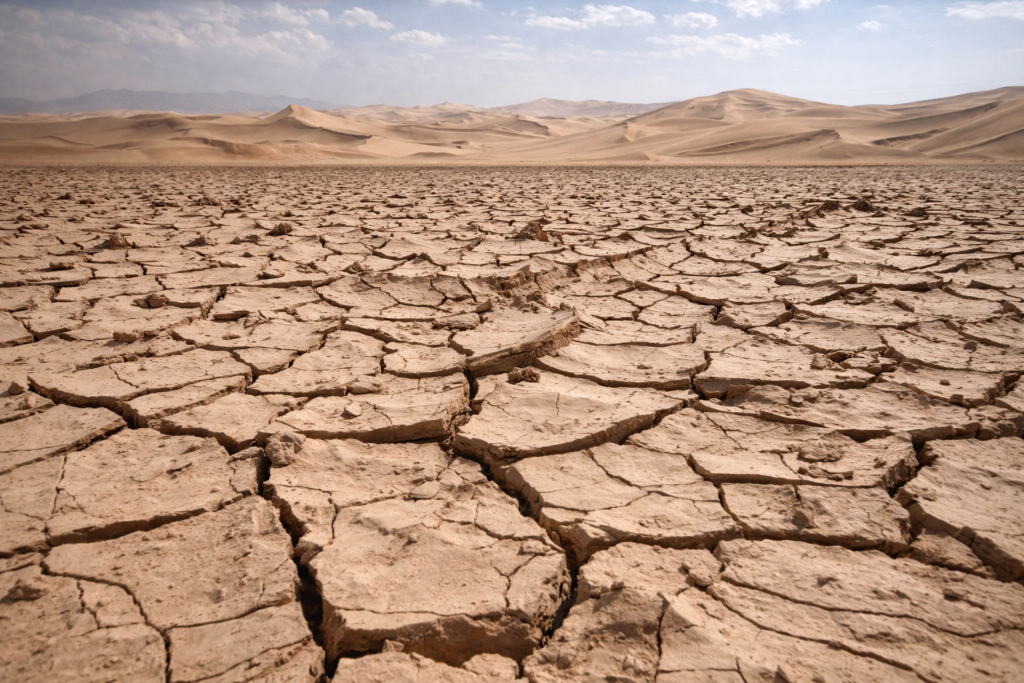
Despite advanced technology and massive investments in desalination plants, Saudi Arabia and the United Arab Emirates import billions in fresh water every year.
There are several key reasons behind this situation:
- Rapid population growth
- Expanding cities
- Agricultural needs
- Industrial development
- Climate conditions
These factors create enormous water demand that exceeds local production capacity.
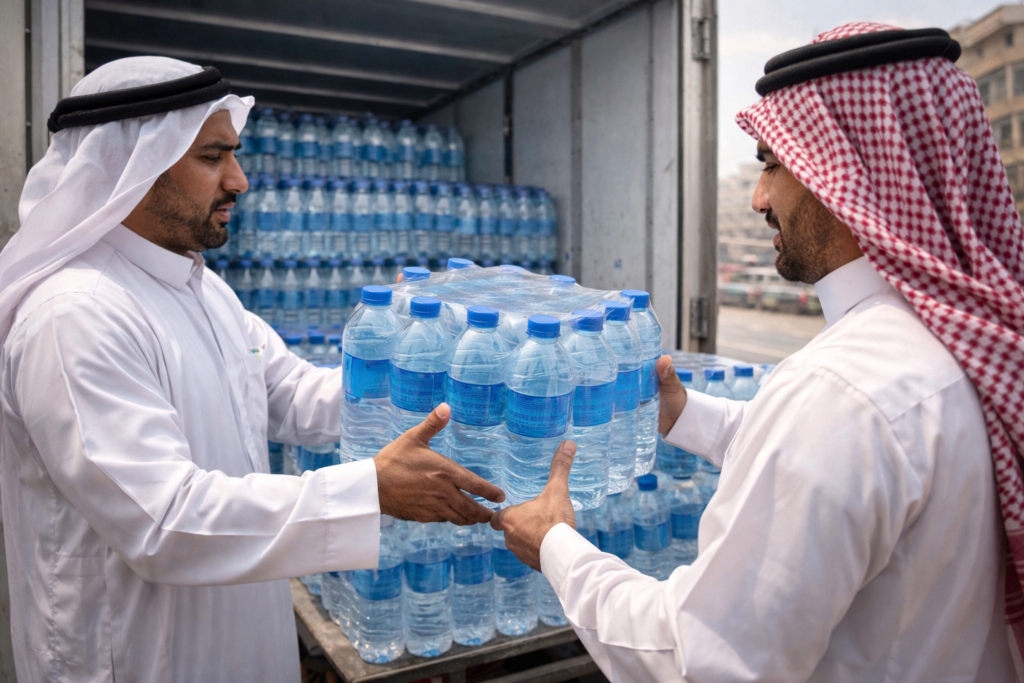
Importing freshwater allows both countries to supplement their domestic supply and maintain reliable water access for their populations.
The Role of Desalination in the Gulf Region
Desalination plays a central role in water production across the Gulf region.
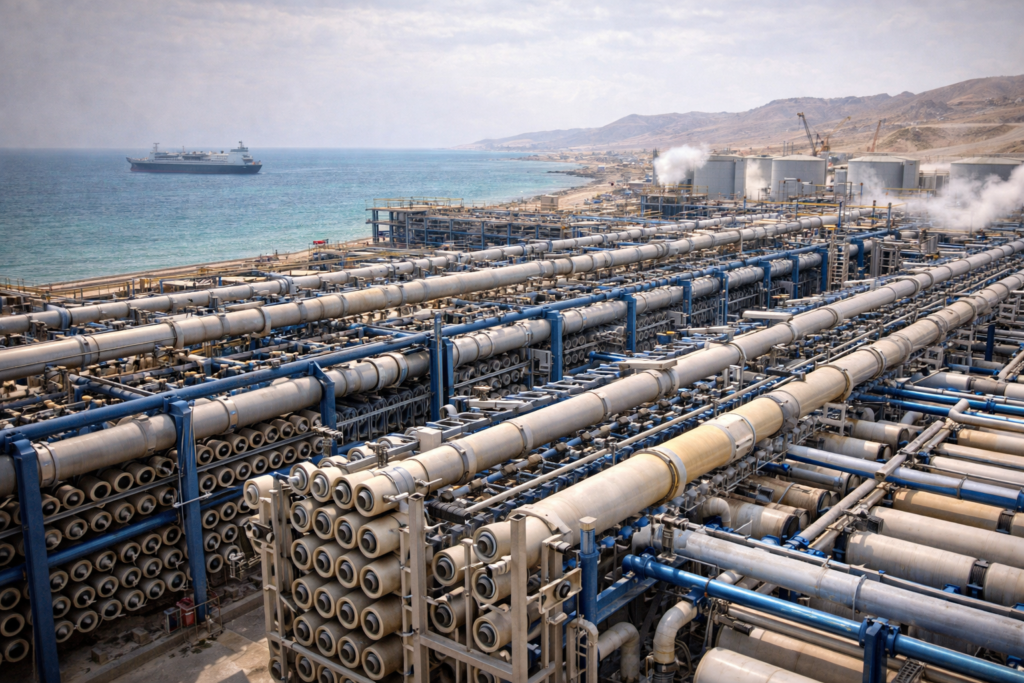
Saudi Arabia and the UAE operate some of the largest desalination facilities in the world. These plants remove salt from seawater to produce drinking water.
Desalination technology has allowed these countries to transform seawater into a dependable source of freshwater.
Major desalination projects in the region produce millions of liters of water every day. This water supports:
- Residential consumption
- Industrial activities
- Urban infrastructure
However, desalination alone cannot fully replace natural freshwater sources.
Why Desalination Alone Cannot Meet All Water Needs
While desalination is an essential solution, it has limitations.
First, desalination plants require large amounts of energy. Operating these facilities consumes significant electricity, which increases costs.
Second, desalination plants are expensive to build and maintain. Large infrastructure investments are needed to sustain production.
Third, desalination capacity cannot always expand quickly enough to keep up with rising water demand.
Because of these factors, Saudi Arabia and the United Arab Emirates import billions in fresh water to balance supply and demand.
Rapid Population Growth and Urban Expansion
Population growth is one of the biggest drivers of water demand in the Gulf region.
Over the past few decades, cities such as Riyadh, Dubai, and Abu Dhabi have experienced rapid expansion.
Urban growth increases demand for:
- Drinking water
- Sanitation services
- Cooling systems
- Landscaping and public spaces
Modern cities require enormous amounts of water to function efficiently.
As populations continue to grow, governments must find additional ways to secure water supplies.
Agriculture and Water Consumption
Agriculture is another major contributor to water demand.
Even though desert climates are not ideal for farming, both Saudi Arabia and the UAE invest in agricultural projects to improve food security.
However, agriculture requires significant water resources.
Crops such as wheat, vegetables, and fruits need consistent irrigation.
Because natural rainfall is scarce, irrigation relies heavily on groundwater or desalinated water.
In some cases, importing freshwater becomes a practical solution to support agricultural production.
Economic Growth and Industrial Water Demand
The economies of Saudi Arabia and the United Arab Emirates have grown rapidly over the past several decades.
Major industries including:
- Oil and gas
- Manufacturing
- Construction
- Tourism
all require large quantities of water.
Industrial operations use water for cooling, cleaning, and production processes.
As economic development continues, water demand from industrial sectors continues to increase.
Environmental Concerns Around Desalination
Although desalination provides essential water supplies, it also raises environmental concerns.
One major issue is the discharge of concentrated salt back into the ocean. This byproduct, known as brine, can affect marine ecosystems.
Desalination plants also consume significant energy, contributing to carbon emissions if powered by fossil fuels.
Because of these environmental challenges, governments are exploring cleaner technologies and alternative solutions.
Infrastructure and Distribution Challenges
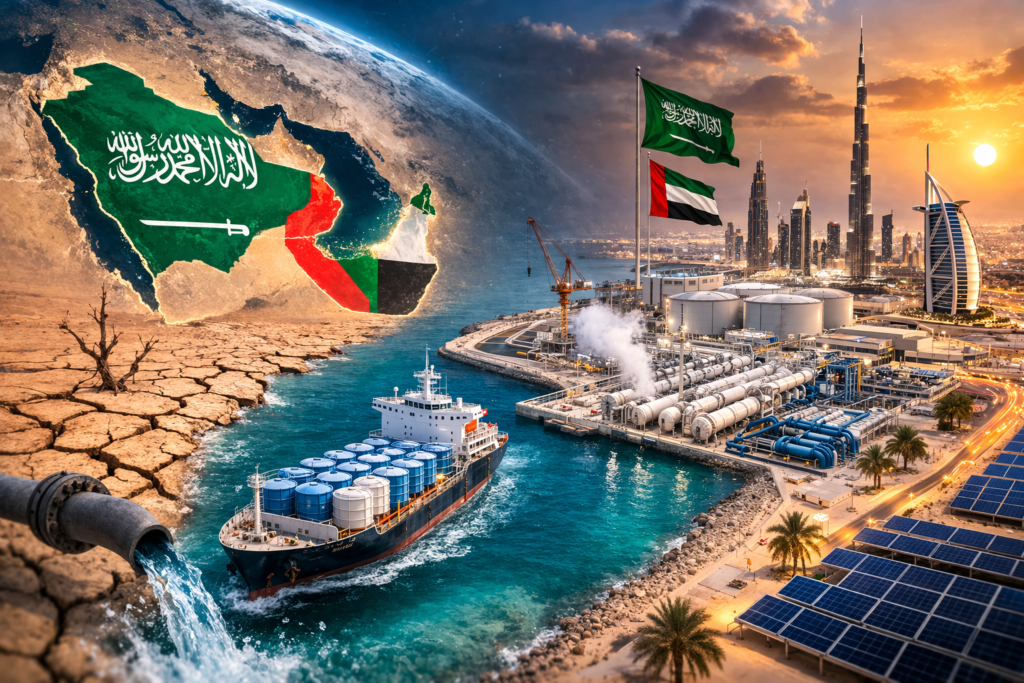
Producing water is only one part of the equation. Delivering water to homes, businesses, and farms requires extensive infrastructure.
Pipelines, storage facilities, and distribution networks must be maintained across large distances.
In some cases, importing freshwater from other regions may be more efficient than building additional infrastructure.
This logistical reality contributes to why Saudi Arabia and the United Arab Emirates import billions in fresh water each year.
The Rising Cost of Water Production
Producing freshwater in desert regions is extremely expensive.
Costs include:
- Energy consumption
- Construction of desalination plants
- Maintenance and repairs
- Water transport and storage
These costs can make water production a significant part of national budgets.
Importing freshwater can sometimes provide a cost-effective supplement to domestic water production.
Water Security Strategies in the Gulf
Water security has become a top priority for governments across the Gulf region.
Saudi Arabia and the UAE have implemented several strategies to strengthen water supply systems.
These include:
- Expanding desalination capacity
- Investing in water recycling
- Reducing water waste
- Improving infrastructure efficiency
Long-term water planning is essential for maintaining stable supplies in a desert climate.
Investments in Sustainable Water Technologies
In recent years, both countries have invested heavily in new technologies to improve water sustainability.
Some innovations include:
- Solar-powered desalination plants
- Advanced water recycling systems
- Smart water monitoring technologies
These technologies aim to reduce costs and environmental impacts while improving water efficiency.
Regional Cooperation and Global Water Trade
Water imports also highlight the growing importance of global water trade.
Some countries export freshwater through bulk transport systems or specialized water tankers.
Regional cooperation between countries can help address water shortages during periods of high demand.
As water scarcity becomes a global issue, international partnerships may play an increasingly important role.
Future Outlook for Water Supply in Saudi Arabia and the UAE
Looking ahead, water demand in Saudi Arabia and the UAE is expected to continue rising.
Population growth, economic expansion, and climate change will all influence future water supply strategies.
Governments are working to expand desalination capacity while developing more sustainable water management systems.
At the same time, Saudi Arabia and the United Arab Emirates import billions in fresh water to ensure reliable access during periods of high demand.
The combination of technology, policy planning, and international cooperation will shape the region’s water future.
Conclusion
Water scarcity remains one of the biggest challenges facing the Arabian Peninsula.
Even with some of the world’s most advanced desalination infrastructure, Saudi Arabia and the United Arab Emirates import billions in fresh water every year.
This situation reflects the complex balance between water supply, population growth, economic development, and environmental sustainability.
While desalination will continue to play a central role in water production, a combination of innovative technologies, sustainable policies, and international cooperation will be necessary to secure long-term water resources.
FAQs
Q1. Why do Saudi Arabia and the UAE import freshwater?
They import freshwater to supplement local supplies because desalination alone cannot meet growing water demand.
Q2. Do Saudi Arabia and the UAE rely mostly on desalination?
Yes. Desalination provides a large portion of drinking water, but additional sources are needed.
Q3. Is desalination expensive?
Yes. Desalination requires significant energy and infrastructure investment.