
Introduction
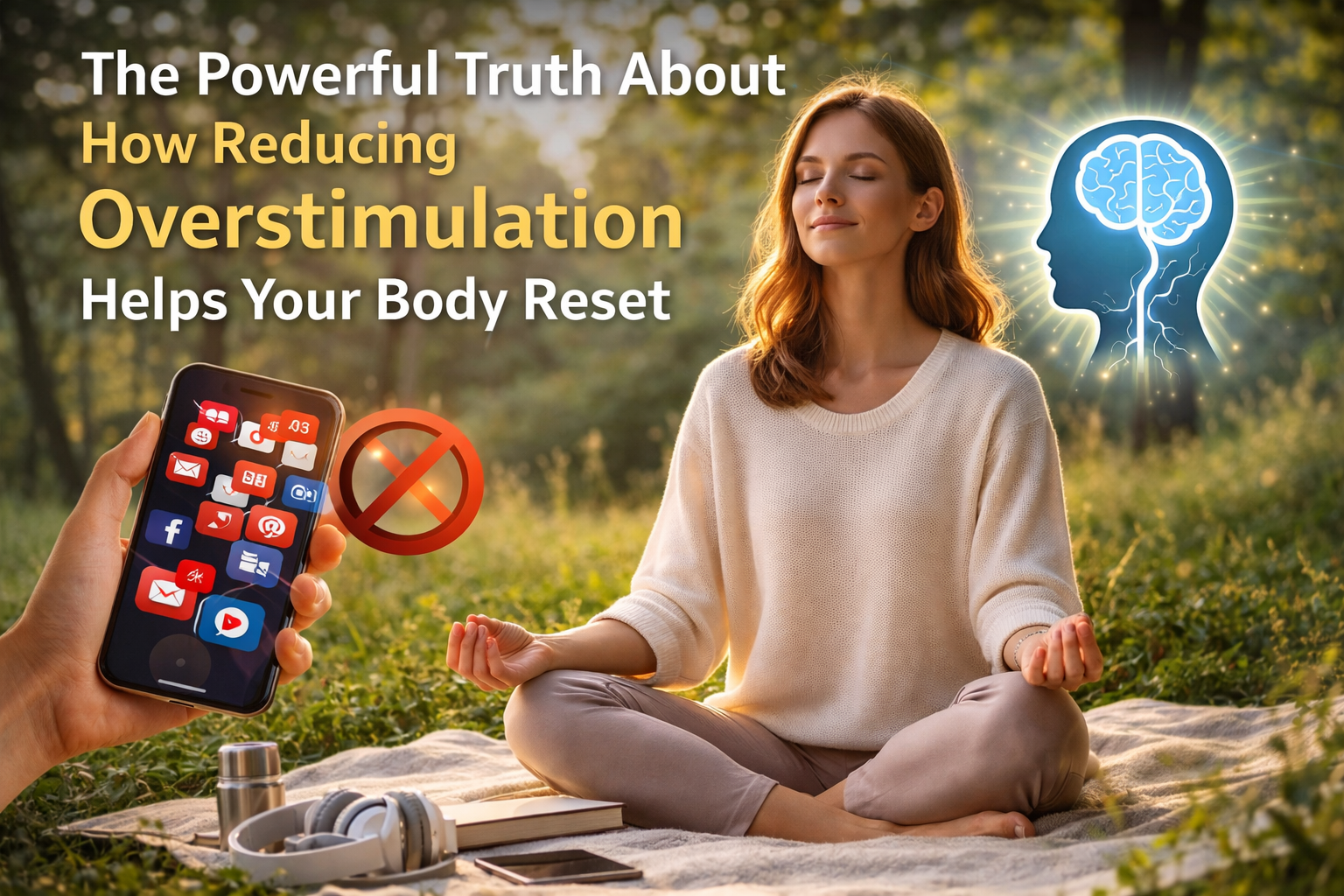
In today’s fast-paced world, people are constantly surrounded by noise, screens, notifications, and endless streams of information. This constant exposure can overwhelm the brain and body, leading to a state known as overstimulation.
Understanding how reducing overstimulation helps your body reset is essential for maintaining both mental and physical well-being. By stepping away from excessive stimuli, individuals can restore balance, improve focus, and enhance overall health.
This article explores how reducing overstimulation helps your body reset and why it is becoming an important part of modern self care.

What Is Overstimulation
Overstimulation occurs when the brain receives more sensory input than it can comfortably process.
This can come from:
- Excessive screen time
- Loud environments
- Constant notifications
- Multitasking
- Emotional stress
When overstimulation becomes frequent, it can disrupt the body’s natural balance.
Signs Your Body Is Overstimulated
Recognizing overstimulation is the first step toward recovery.
Common signs include:
- Difficulty concentrating
- Irritability
- Fatigue
- Anxiety
- Trouble sleeping
These symptoms often indicate that the brain needs rest and recovery.

How Modern Life Increases Overstimulation
Modern lifestyles contribute heavily to overstimulation.
Smartphones, social media, and digital devices keep people constantly engaged. Even during rest, many individuals continue to consume information through screens.
Urban environments also add to sensory overload with noise, lights, and constant activity.
This explains why learning how reducing overstimulation helps your body reset is more important than ever.
How Reducing Overstimulation Helps Your Body Reset
When you reduce sensory input, your body gets a chance to recover.
Lower stimulation levels allow the brain to:
- Process information more effectively
- Restore mental clarity
- Reduce stress responses
This process helps reset the nervous system and improves overall well-being.
The Impact on the Nervous System
The nervous system plays a key role in how the body responds to stimuli.
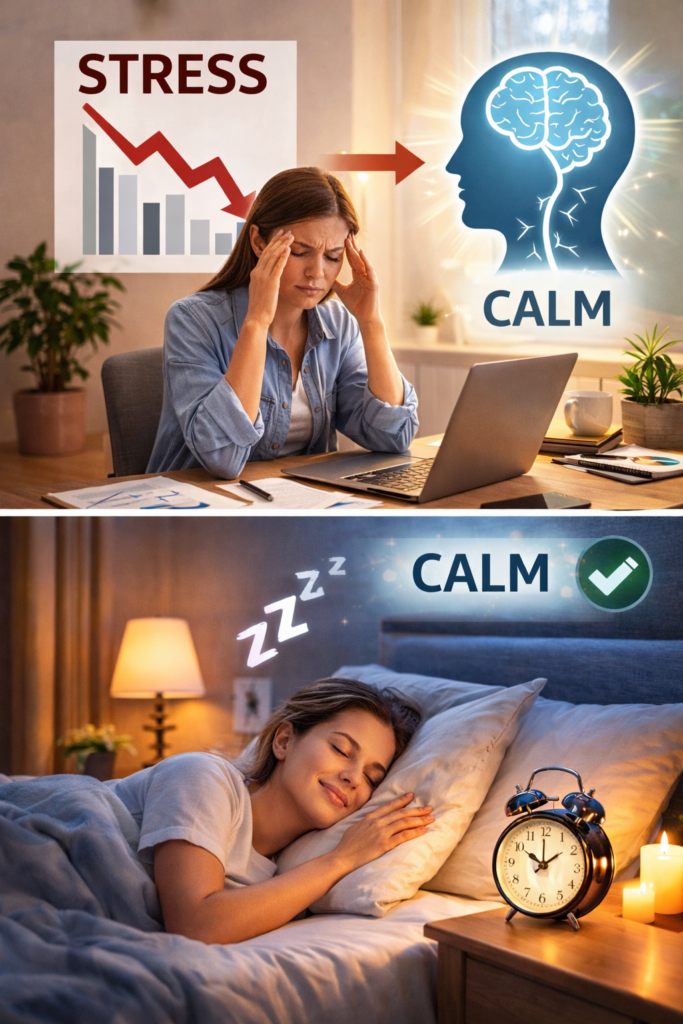
Overstimulation can keep the body in a constant “fight or flight” state. This leads to increased stress hormones such as cortisol.
Reducing stimulation allows the body to shift into a “rest and digest” mode.
This balance is crucial for healing and recovery.
Mental Health Benefits of Reducing Overstimulation
One of the most important benefits is improved mental health.
Reducing overstimulation can:
- Lower anxiety levels
- Improve mood
- Increase focus
- Reduce mental fatigue
When the brain is not overwhelmed, it functions more efficiently.
Physical Health Improvements
The effects are not limited to the mind.
Reducing overstimulation can also improve physical health by:
- Lowering heart rate
- Reducing muscle tension
- Improving digestion
These changes help the body return to a natural, balanced state.
Better Sleep Through Reduced Stimulation
Sleep is one of the first areas affected by overstimulation.
Exposure to screens and constant activity can disrupt sleep patterns.
Reducing stimulation before bedtime helps:
- Improve sleep quality
- Promote relaxation
- Regulate circadian rhythms
Better sleep is a key reason how reducing overstimulation helps your body reset effectively.
The Role of Dopamine and Sensory Overload
Dopamine is a chemical in the brain associated with pleasure and reward.
Constant stimulation from social media, entertainment, and notifications can overstimulate dopamine pathways.
This can lead to:
- Reduced motivation
- Difficulty focusing
- Increased dependency on stimulation
Reducing overstimulation helps restore healthy dopamine levels.
How to Start Reducing Overstimulation
Making small changes can have a big impact.
Start by:
- Limiting screen time
- Turning off unnecessary notifications
- Spending time in quiet environments
Gradual changes are more sustainable and effective.
Daily Habits to Reset Your Body
Incorporating simple habits can support the reset process.
Take Breaks from Screens
Regular breaks reduce mental fatigue.
Practice Mindfulness
Meditation and deep breathing calm the mind.
Spend Time in Nature
Natural environments reduce sensory overload.
Limit Multitasking
Focusing on one task improves mental clarity.
Digital Detox and Its Importance
A digital detox involves reducing the use of electronic devices.
This helps:
- Decrease mental clutter
- Improve focus
- Reduce stress
Even short breaks from technology can significantly improve well-being.
Creating a Calm Environment
Your surroundings play a major role in stimulation levels.
To create a calming space:
- Use soft lighting
- Reduce noise
- Keep spaces organized
A peaceful environment supports the body’s ability to reset.
Long-Term Benefits of Reducing Overstimulation
Over time, reducing overstimulation can lead to lasting improvements.
These include:
- Increased productivity
- Better emotional balance
- Improved physical health
- Enhanced quality of life
Consistency is key to experiencing these benefits.
Conclusion
Understanding how reducing overstimulation helps your body reset can transform the way you approach daily life.
In a world filled with constant distractions, taking time to reduce sensory input is essential for maintaining balance and well-being.
By making small adjustments, individuals can improve mental clarity, enhance physical health, and create a more peaceful lifestyle.
Sometimes, the most powerful way to move forward is simply to slow down.
FAQs
Q1. What is overstimulation in simple terms?
Overstimulation occurs when the brain receives too much sensory input, making it difficult to process information effectively.
Q2. How long does it take for the body to reset?
It varies, but even a few days of reduced stimulation can improve focus and relaxation.
Q3. Can reducing overstimulation improve anxiety?
Yes, it can help lower stress levels and reduce anxiety symptoms.