
Introduction
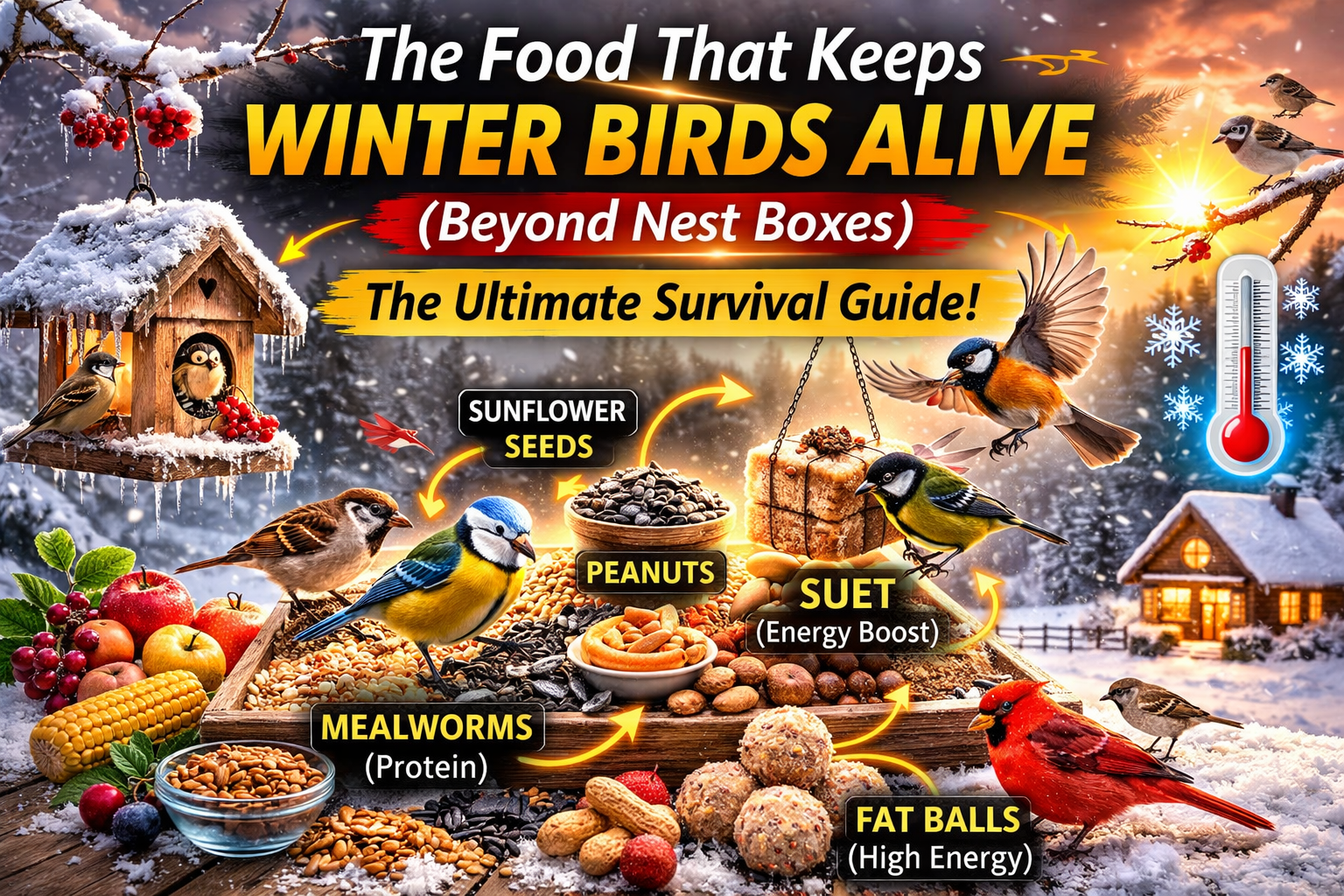
Every year, as temperatures drop and snow covers the ground, birds face one of their toughest survival challenges. While many people focus on providing nest boxes, fewer realize the importance of food that keeps winter birds alive.
During winter, natural food sources become scarce, forcing birds to rely on alternative sources to survive. Providing the right kind of food can make a significant difference in their survival.
Understanding food that keeps winter birds alive is essential for anyone who wants to support wildlife during colder months.
Why Winter Is Hard for Birds
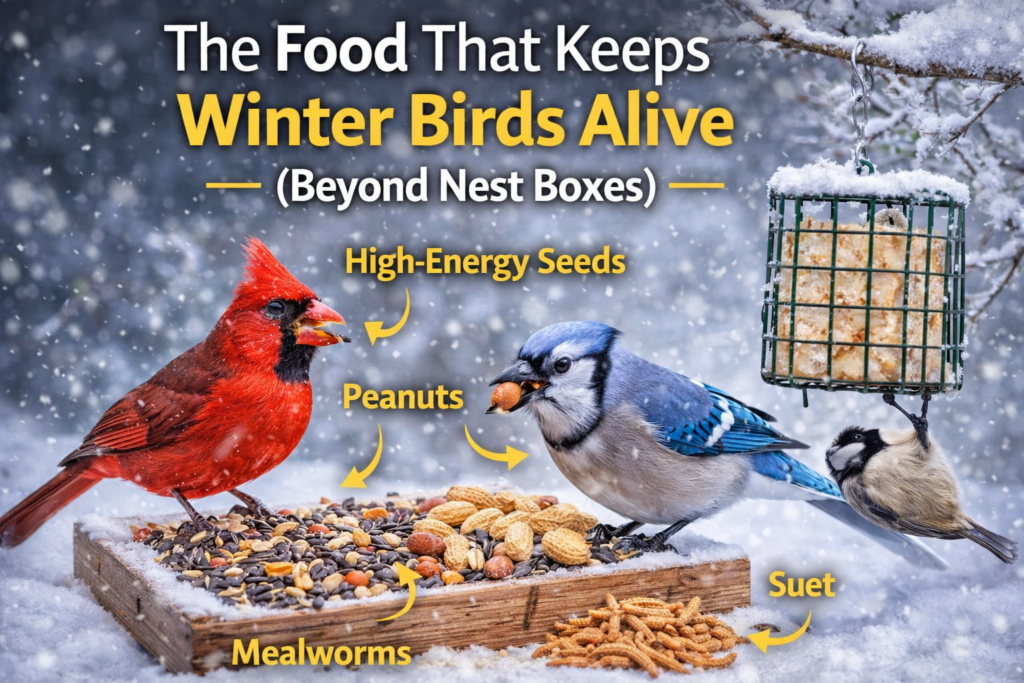
Winter presents several challenges for birds.
Food becomes scarce as insects disappear and plants stop producing seeds and fruits.
Cold temperatures also increase the energy birds need to stay warm.
Birds must:
- Maintain body heat
- Search for food constantly
- Avoid predators
Without enough food, survival becomes extremely difficult.
Why Nest Boxes Aren’t Enough
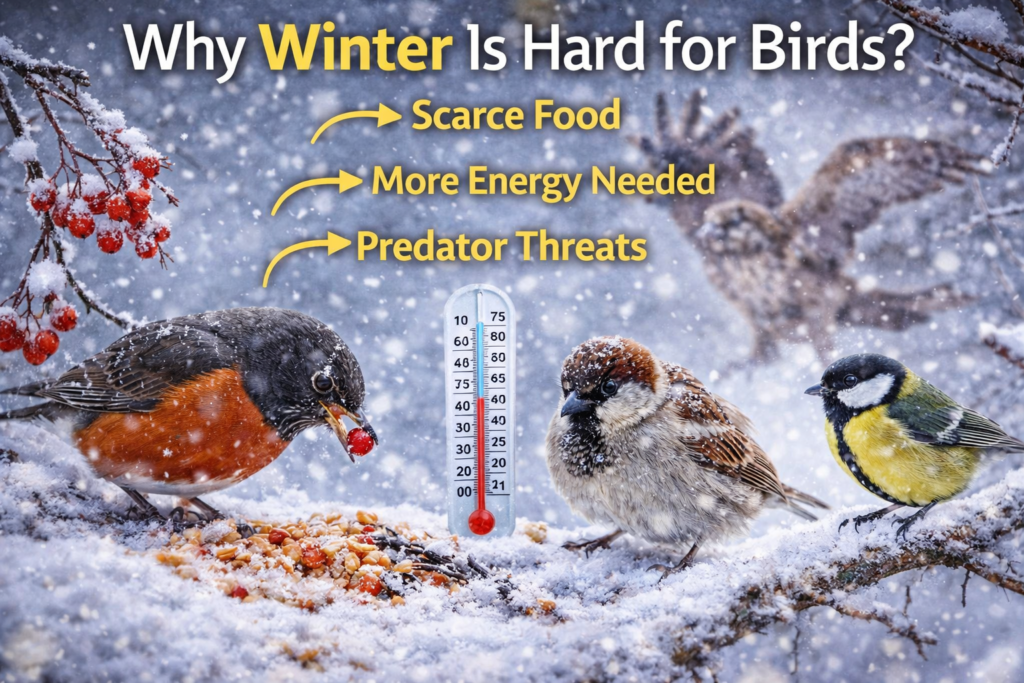
Nest boxes are helpful for shelter, but they do not solve the biggest problem birds face in winter—lack of food.
While shelter protects birds from harsh weather, it does not provide the energy needed for survival.
This is why focusing on food that keeps winter birds alive is more important during colder months.
The Food That Keeps Winter Birds Alive
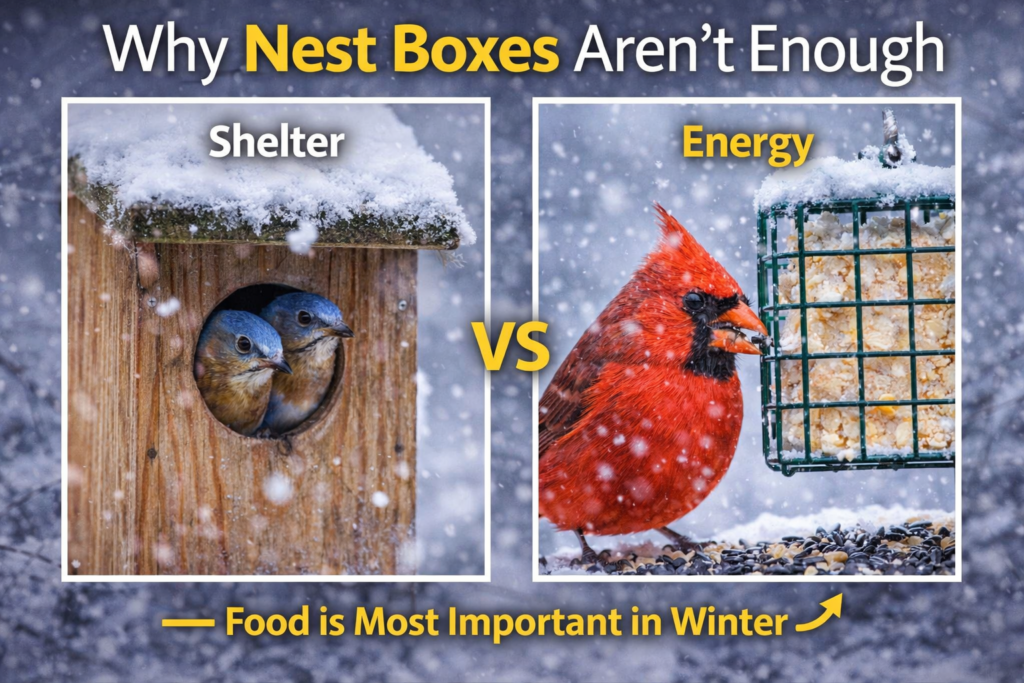
The key to helping birds survive winter is providing high-energy food.
Birds need food that is:
- Rich in fats
- High in calories
- Easy to access
This type of food helps birds maintain body heat and energy levels.
High-Energy Foods Birds Need
Birds burn a lot of energy during winter.
To survive, they need foods that provide maximum energy.
Examples include:
- Suet
- Peanuts
- Sunflower seeds
- Fat balls
These foods are essential as food that keeps winter birds alive.
Why Fat-Rich Foods Are Essential
Fat is the most important nutrient for winter survival.
It provides more energy than carbohydrates or protein.
Fat-rich foods help birds:
- Stay warm
- Maintain energy levels
- Survive cold nights
This is why suet and similar foods are highly recommended.
Best Seeds for Winter Birds
Seeds are a staple in bird diets.
Some of the best options include:
Sunflower Seeds
High in fat and easy to eat.
Niger Seeds
Popular among smaller birds.
Millet
Good for ground-feeding birds.
Providing a mix of seeds ensures a variety of birds can benefit.
The Importance of Protein Sources
Protein is also important, especially for maintaining strength.
Sources include:
- Mealworms
- Peanut butter
- Nuts
Protein helps birds stay healthy and active during winter.
Homemade Bird Food Ideas
Making your own bird food is simple and cost-effective.
DIY Fat Balls
Mix seeds, nuts, and melted fat.
Peanut Butter Mix
Combine peanut butter with seeds.
Fruit and Seed Mix
Add dried fruits for extra nutrients.
These homemade options are excellent food that keeps winter birds alive.
How to Set Up a Winter Feeding Station
Proper setup ensures birds can easily access food.
Choose the Right Location
Place feeders in sheltered areas.
Use Multiple Feeders
Different birds prefer different feeders.
Keep Food Fresh
Replace food regularly to prevent spoilage.
A well-maintained feeding station attracts more birds.
Common Mistakes When Feeding Birds in Winter
Avoid these common mistakes:
Using Low-Quality Food
Poor food does not provide enough energy.
Inconsistent Feeding
Birds rely on regular food sources.
Dirty Feeders
Can spread disease.
Proper care ensures birds stay healthy.
How Feeding Helps Bird Survival
Providing food has a direct impact on bird survival.
It helps birds:
- Conserve energy
- Stay warm
- Survive harsh conditions
Supporting birds with proper food can significantly improve their chances of survival.
Attracting Different Bird Species
Different foods attract different birds.
Finches
Prefer small seeds.
Woodpeckers
Enjoy suet and nuts.
Sparrows
Like grains and millet.
Offering a variety of foods increases diversity.
Safety Tips for Bird Feeding
Safety is important when feeding birds.
- Keep feeders clean
- Avoid moldy food
- Place feeders away from predators
These steps help protect birds.
Conclusion
While nest boxes provide shelter, they are not enough to ensure survival during winter.
The real key lies in providing food that keeps winter birds alive.
By offering high-energy, fat-rich foods, you can help birds survive harsh conditions and maintain their strength.
Supporting birds during winter is a simple yet powerful way to contribute to wildlife conservation.
FAQs
Q1. What is the best food for winter birds?
Suet, sunflower seeds, and peanuts are among the best options.
Q2. How often should I feed birds in winter?
Daily feeding is recommended, especially during extreme cold.
Q3. Can birds survive without feeders?
Some can, but feeders greatly improve survival chances.