
Introduction
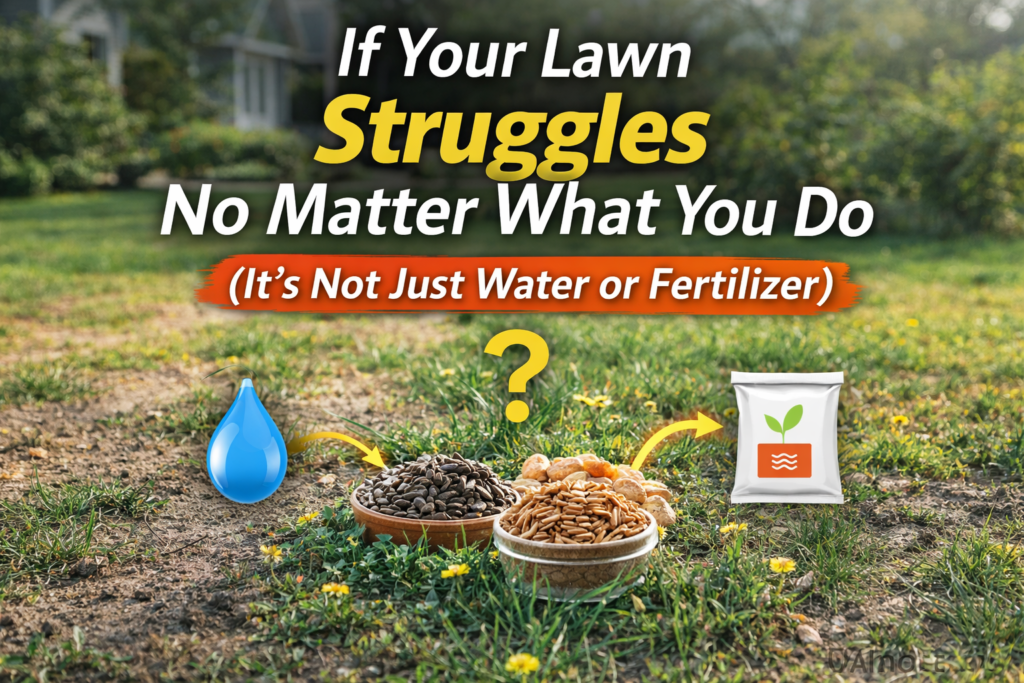
If your lawn struggles no matter what you do, you’re not alone. Many homeowners invest time, money, and effort into watering and fertilizing their lawns, only to see disappointing results.
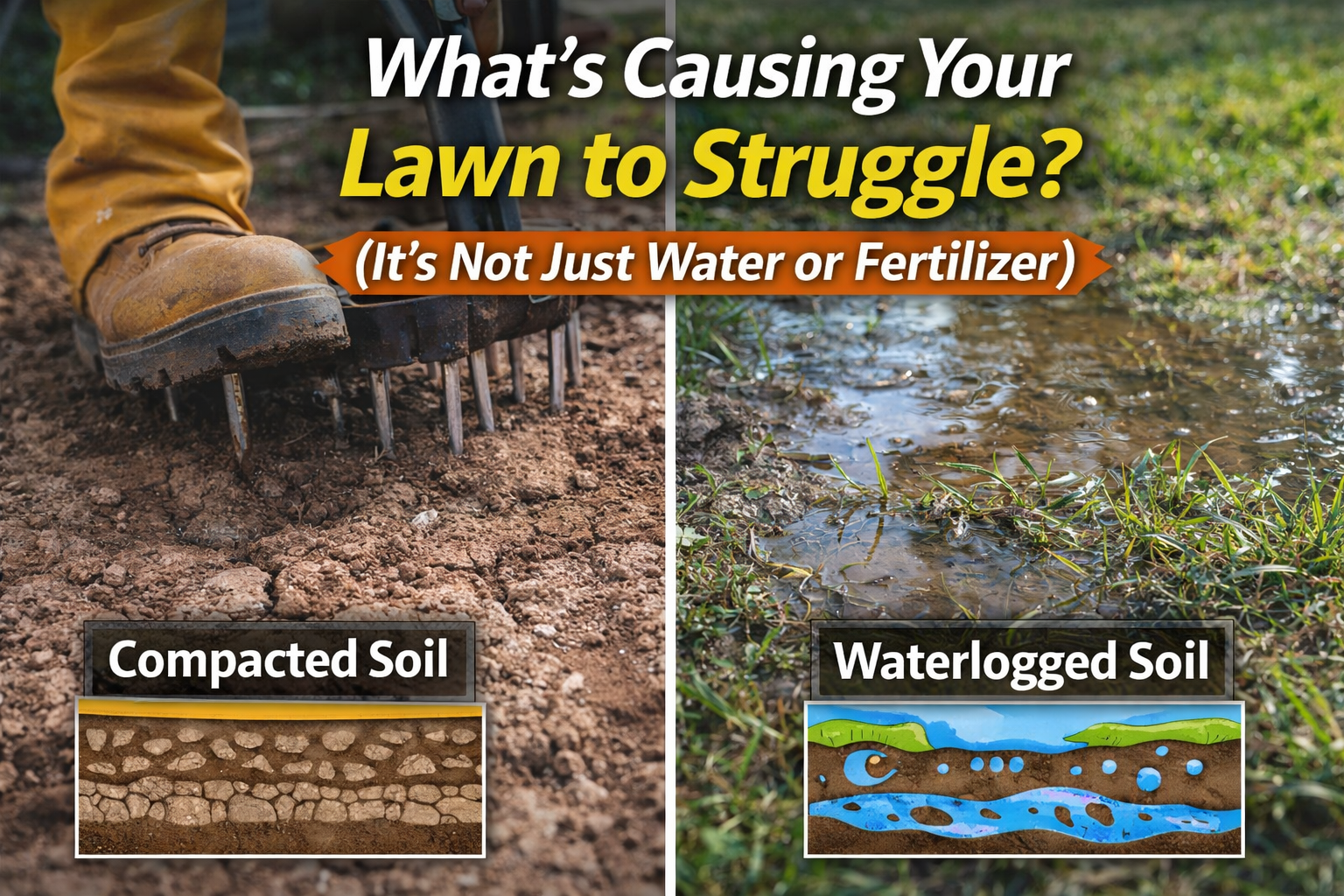
The truth is, a struggling lawn is often caused by factors that go beyond basic care. While water and fertilizer are important, they are not always the root of the problem.
Understanding why your lawn struggles no matter what you do can help you identify hidden issues and finally achieve a healthy, green yard.
Why Your Lawn Struggles No Matter What You Do
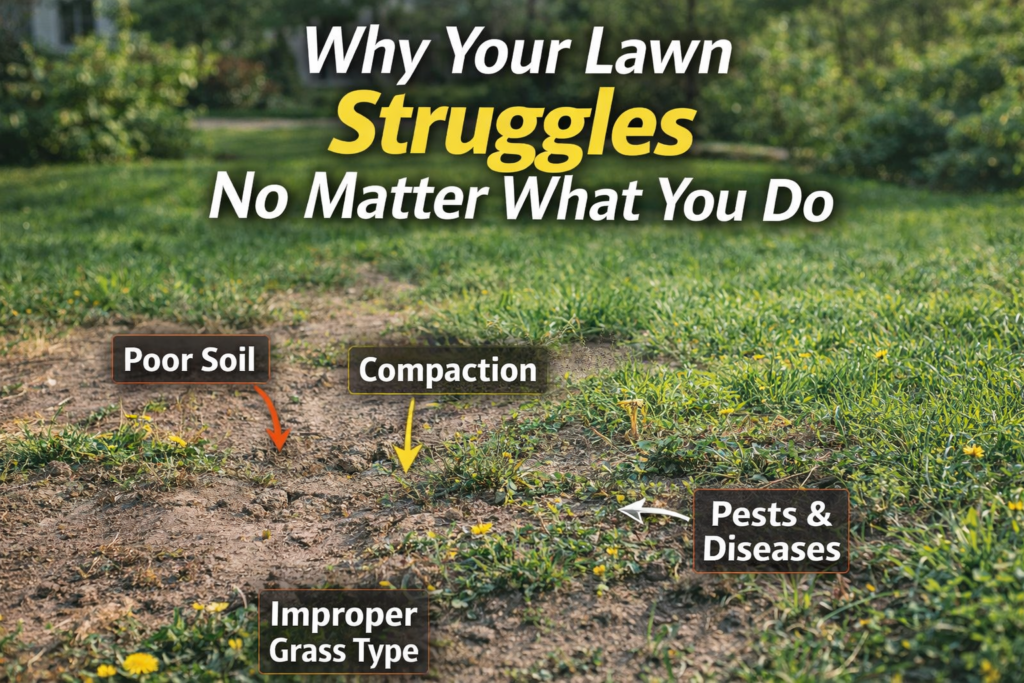
A lawn that refuses to thrive usually has underlying issues.
These problems can include:
- Poor soil conditions
- Incorrect grass type
- Compaction or drainage issues
- Pests or diseases
Without addressing these root causes, even the best care routine may fail.
The Common Misconception About Water and Fertilizer
Many people assume that more water and fertilizer will fix a struggling lawn.
However, overwatering can damage roots, and excessive fertilizer can harm soil balance.
This misconception often leads to worsening conditions instead of improvement.
Soil Health: The Hidden Factor
Healthy soil is the foundation of a thriving lawn.
If the soil lacks nutrients or structure, grass cannot grow properly.
Key elements of healthy soil include:
- Proper nutrient balance
- Good aeration
- Adequate organic matter
Improving soil health is essential when your lawn struggles no matter what you do.
Soil Compaction and Its Effects
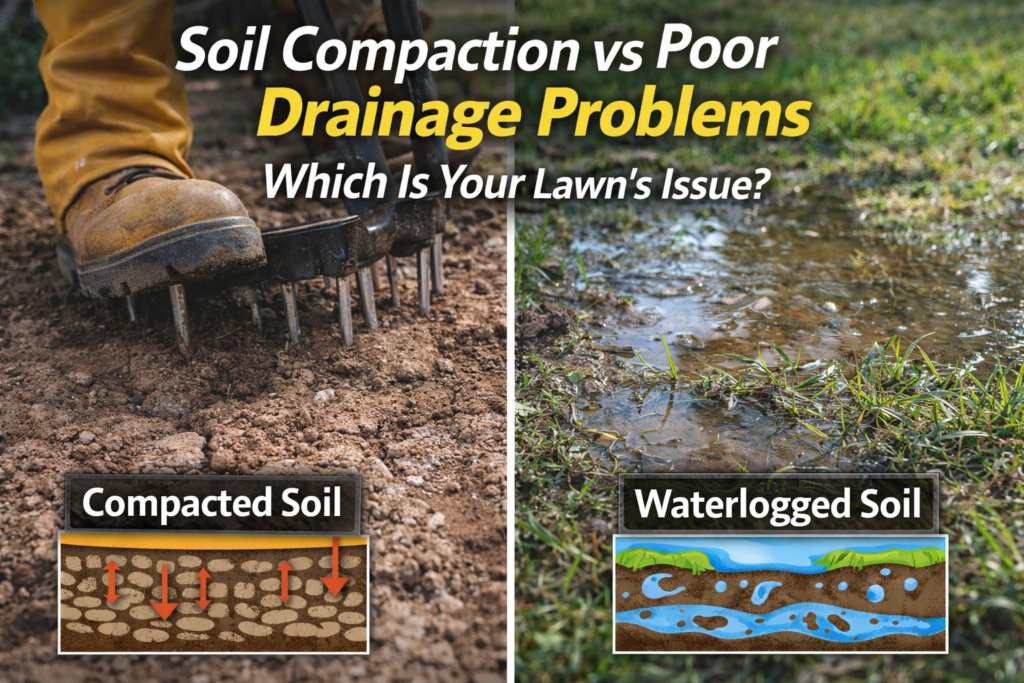
Compacted soil prevents roots from growing and accessing nutrients.
It also reduces water absorption.
Signs of soil compaction include:
- Hard, dense ground
- Poor drainage
- Thin grass growth
Aerating the soil can help relieve compaction.
Poor Drainage Problems
Drainage issues can cause water to either accumulate or run off too quickly.
Both situations harm grass growth.
Standing water can lead to root rot, while poor retention can dry out the lawn.
The Role of Soil pH
Soil pH affects how nutrients are absorbed.
If the pH is too high or too low, grass cannot use available nutrients effectively.
Testing soil pH can help determine necessary adjustments
Grass Type and Climate Compatibility
Not all grass types are suitable for every climate.
Using the wrong type of grass can result in poor growth.
For example:
- Cool-season grasses thrive in colder climates
- Warm-season grasses prefer hot conditions
Choosing the right grass type is crucial.
Thatch Buildup Issues
Thatch is a layer of organic material that builds up between the soil and grass.
Excessive thatch can block water and nutrients.
Regular dethatching helps maintain lawn health.
Lawn Pests and Diseases
Pests and diseases can damage grass without obvious signs at first.
Common issues include:
- Grubs
- Fungal infections
- Insects feeding on roots
Identifying and treating these problems early is important.
Overwatering vs Underwatering
Both overwatering and underwatering can harm your lawn.
Overwatering:
- Weakens roots
- Encourages disease
Underwatering:
- Dries out grass
- Causes patchy growth
Finding the right balance is key.
Mowing Mistakes That Damage Lawns
Improper mowing can stress grass.
Common mistakes include:
- Cutting grass too short
- Using dull blades
- Mowing too frequently
Proper mowing techniques help maintain healthy growth.
How to Diagnose Your Lawn Problem
Diagnosing the issue is the first step toward improvement.
Check Soil Condition
Look for compaction or poor texture.
Observe Grass Growth
Identify patterns of damage.
Test Soil pH
Determine nutrient availability.
Inspect for Pests
Check for signs of infestation.
Practical Solutions to Revive Your Lawn
Once you identify the problem, take action.
Aerate the Soil
Improves airflow and root growth.
Add Organic Matter
Enhances soil quality.
Adjust Watering Schedule
Provide consistent moisture.
Choose the Right Fertilizer
Use balanced nutrients.
These steps can help fix a lawn that struggles.
Long-Term Lawn Care Tips
Maintaining a healthy lawn requires consistent care.
- Regular soil testing
- Seasonal fertilization
- Proper mowing practices
- Adequate watering
Long-term care prevents recurring issues.
Conclusion
If your lawn struggles no matter what you do, the problem is often deeper than water or fertilizer.
Understanding soil health, drainage, grass type, and other factors can help you identify the real issue.
By addressing these underlying problems, you can transform your lawn into a healthy and vibrant space.
Sometimes, the solution lies not in doing more—but in doing the right things.
FAQs
Q1. Why does my lawn look unhealthy despite watering?
It may be due to poor soil, compaction, or incorrect grass type.
Q2. How can I improve my lawn soil?
Adding organic matter and aerating the soil can help.
Q3. Is fertilizer always necessary?
Not always. Overuse can harm your lawn.